

Mowi recorded revenue of EUR 1.6 billion and operational EBIT of EUR 231 million in the second quarter of 2026. Operational earnings increased by 23% compared with the same period last year, supported by strong farming performance and lower production costs.
The company harvested 150,000 tonnes of salmon during the quarter, its highest-ever volume for this period of the year and 7.4% more than in the second quarter of 2025. Mowi highlighted particularly strong results in Norway and Scotland, where increased production was accompanied by cost reductions.
According to chief executive Ivan Vindheim, the figures reflect the company’s continued expansion strategy. Mowi has increased its annual farming scale from around 400,000 tonnes to approximately 600,000 tonnes within a few years, making volume growth one of the main drivers of its ability to absorb periods of weaker market prices.
Mowi’s second-quarter performance
| Indicator | Q2 2026 | Year-on-year change |
|---|---|---|
| Revenue | EUR 1.6 billion | Record high |
| Operational EBIT | EUR 231 million | +23% |
| Salmon harvest volume | 150,000 tonnes | +7.4% |
| Consumer Products volume | 74,000 tonnes | +14% |
| Salmon demand value | — | +9% |
| Quarterly dividend | NOK 2.30 per share | — |
The quarter followed a period in which unusually strong supply growth placed pressure on salmon prices. Mowi reported that prices were 6% higher in the second quarter and 21% higher so far in the third quarter compared with the corresponding periods of 2025, as industry supply growth began to normalise and demand remained firm.
The company expects limited growth in global salmon supply over the coming years. This is Mowi’s own market assessment rather than a confirmed industry forecast, but the producer believes that slower supply expansion, combined with continued demand growth, should produce a more balanced market than that seen over the past 18 months.
Growth was also visible beyond farming. Mowi Consumer Products processed a seasonal record of 74,000 tonnes, up 14%, while its feed division recorded its highest second-quarter revenue and sales volumes. These results show how the group’s vertically integrated structure allows additional farming volume to support its processing and feed businesses as well as primary production.

Related

Latest In-depth
-
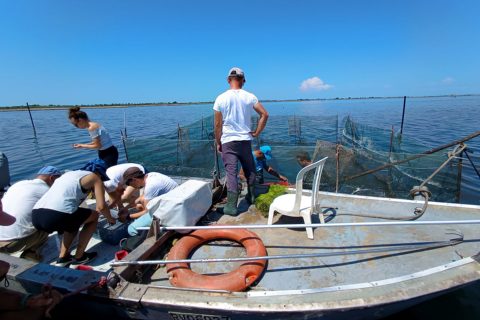
Clams more resistant to heat and Perkinsus: research paves the way for selective breeding
Padua, Italy, 16/10/2026 | University of Padua researchers explain to misPeces the findings presented at Aquaculture Europe 2026 and the steps needed to transfer them to hatcheries. Initial applications could emerge within the next two or three years, although the relationship between resistance, growth and other production traits still need to be assessed