
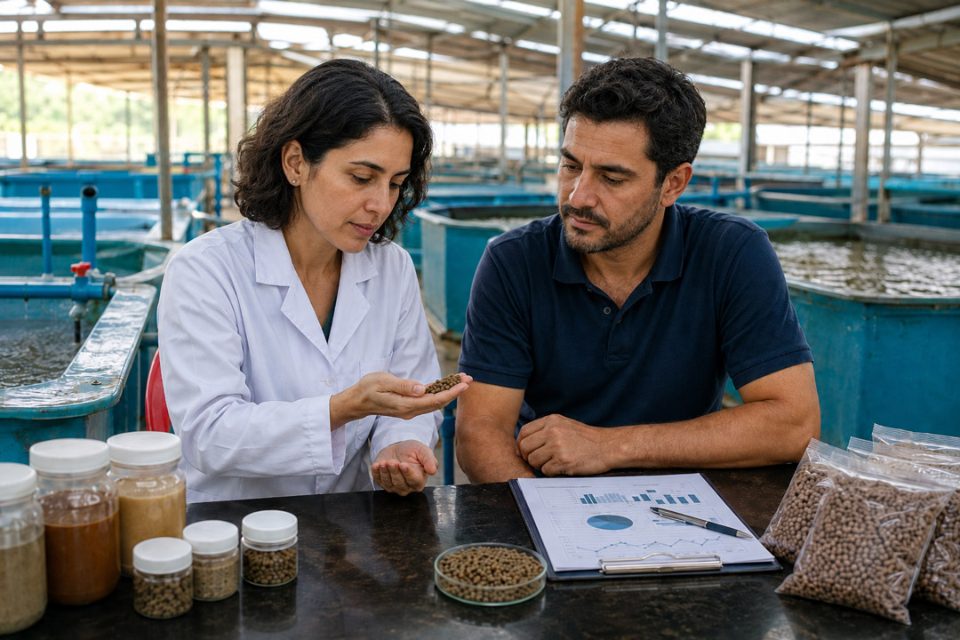
Protein hydrolysates are gaining ground in aquaculture nutrition research and industrial projects. Their main appeal lies in the possibility of using by-products from fisheries, aquaculture and other food industries to obtain peptides, free amino acids and soluble compounds that can improve feed palatability and nutrient utilisation.
However, referring to “hydrolysates” as though they were a single ingredient can lead to misleading conclusions. Their composition and price vary depending on the raw material, degree of hydrolysis, soluble fraction, concentration and drying process.
There are also important differences between a product designed primarily to supply protein and one used at low inclusion levels for its potential functional properties.
The results justify the interest, but economic evidence remains limited
Studies involving Atlantic salmon, European seabass and gilthead seabream show that certain hydrolysates can be incorporated into diets containing less fishmeal without compromising growth.
In some cases, improvements have also been observed in feed intake, digestibility, feed utilisation and certain indicators associated with stress response and health.
However, maintaining fish growth does not in itself demonstrate that an ingredient is profitable.
For producers, the decisive question is not simply whether a hydrolysate works, but whether the resulting improvement offsets its cost and makes it possible to maintain or reduce the expenditure required to produce each kilogramme of fish.
In one trial conversion ratio was even slightly better, although the differences were not statistically significant. The same study showed that a more soluble and extensively processed hydrolysates substantially increased the cost of the diet without delivering an equivalent improvement in production performance.
The result illustrates how processing can determine economic viability
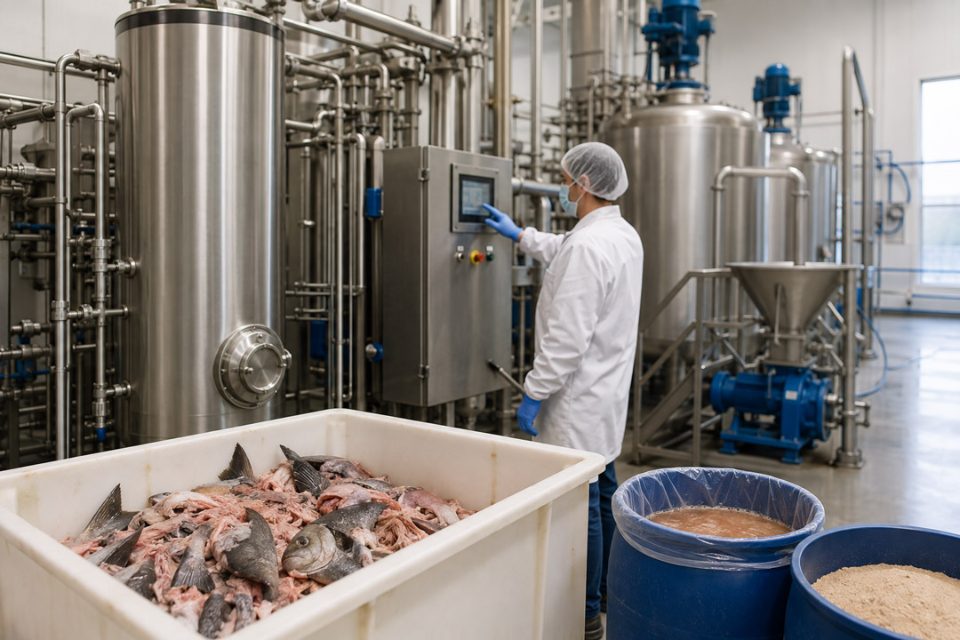
Industrial production involves collecting and stabilising the by-products, adding water and enzymes, controlling hydrolysis, separating the oil and solids, deactivating the enzymes, and concentrating or drying the resulting product.
Energy consumption, extraction yield, plant scale and raw-material consistency all directly affect the final price.
For this reason, their most likely application does not appear to be the large-scale replacement of fishmeal.
The main opportunity lies in low inclusion levels, generally between 1% and 5%, intended to restore palatability, supply functional peptides or sustain the performance of formulations containing high proportions of plant proteins, processed animal proteins or proteins from novel sources.
An expensive hydrolysate may still make economic sense when used at a low inclusion level if it improves feed conversion, accelerates growth, shortens the production cycle or increases survival.
By contrast, using it at high inclusion levels requires it either to replace other costly ingredients or to produce a much clearer biological improvement.
The industry is moving towards commercial demonstration
European companies are investing in plants and projects designed to produce hydrolysates at industrial scale, driven by the opportunity to add value to local raw materials and reduce dependence on imported proteins.
However, the challenge does not end with obtaining a hydrolysate that has biological activity. The product must also withstand feed manufacturing and extrusion, maintain a consistent composition, be available in sufficient volumes and demonstrate its effects under commercial conditions.
Industrial investment does not automatically amount to proof of profitability in aquaculture.
Some projects receive public funding and may rely on a biorefinery model that obtains several products from the same raw material.
Oil, peptides for human nutrition or pet food, partially hydrolysed proteins and mineral fractions can all be directed towards markets offering different prices and margins.
Under this model, aquafeeds can absorb large volumes, while higher-value fractions help support the plant’s overall profitability.
A facility may therefore be economically viable even if not all its hydrolysates are competitive as major ingredients in aquafeeds.
Evidence and commercial application
What has been observed and what remains to be demonstrated
Trials justify the interest in protein hydrolysates, but the biological results still need to translate into reproducible economic benefits under commercial farming conditions.
| What has already been observed | What remains to be demonstrated |
|---|---|
| Some hydrolysates can maintain growth in diets containing less fishmeal. | That they reduce or maintain feed costs per kilogramme of fish produced. |
| In certain formulations, they may improve feed intake, digestibility or feed utilisation. | That the scale and consistency of the effect offset the ingredient’s price. |
| Low inclusion levels have been tested in species including gilthead seabream, European seabass and Atlantic salmon. | That the results persist throughout the production cycle and under commercial farming conditions. |
| Raw material and degree of hydrolysis affect composition, solubility and the response of the fish. | Which combination of raw material, processing and inclusion level provides the best technical and economic balance. |
| Investments and projects are under way to produce hydrolysates at industrial scale. | That the product can consistently deliver competitive quality, volume and price. |
How to read this table: maintaining production performance demonstrates technical viability, but does not automatically mean that the hydrolysate is profitable for the producer.
The outstanding test must take place on the farm
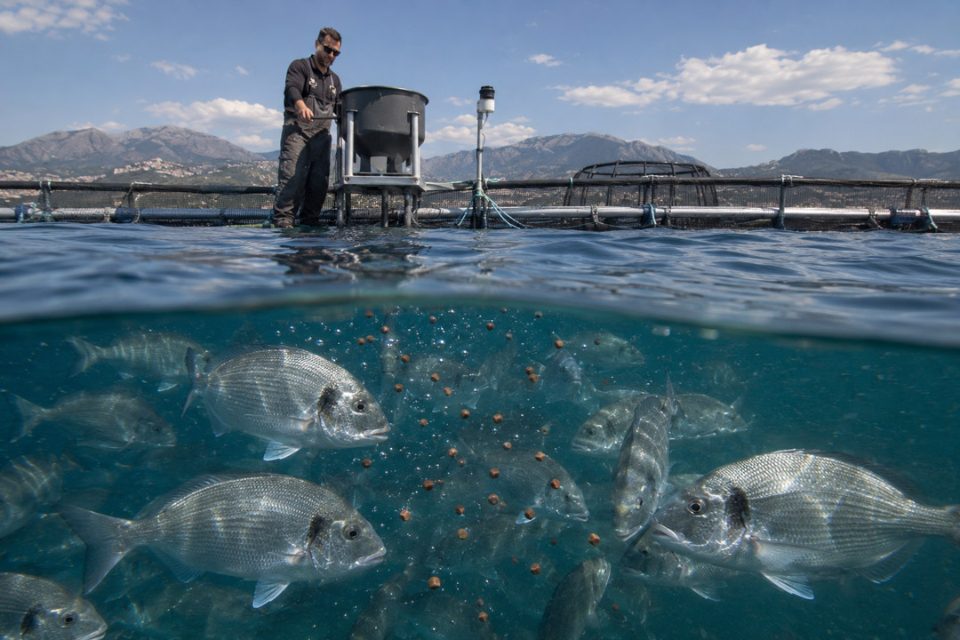
Determining whether these ingredients genuinely reduce production costs requires information on the delivered price of the hydrolysate at the feed mill, its inclusion level, the ingredients it replaces and the total cost of the feed.
These figures must then be considered alongside the feed conversion, growth, survival and production-cycle duration under commercial conditions.
It will also be necessary to establish whether the results can be reproduced across batches, seasons and farms.
The composition of by products can vary while small differences in the hydrolysis process may alter the peptide profile, solubility and response of the fish.
Hydrolysates have sufficient potential to become a useful tool in gilthead seabream and European seabass nutrition, particularly in starter feeds, low-fishmeal diets and formulations intended for periods of stress or recovery.
The industry has already demonstrated that hydrolysates can be produced and incorporated into aquafeeds.
The next – and more difficult – test will be to prove that producers obtain more value than they pay for and that the nutritional improvement does not ultimately increase the cost of the fish produced.
Related

Latest news
-
Piszolla invests nearly €4m to move further into value-added trout processing
Piszolla & Eurotrucha is investing close to €4 million in a major upgrade of its processing facility in Alba de Tormes, Spain, adding a new line designed to fillet large trout.
-
Farmed cod takes 72% of Norway’s fresh cod export value as sector gains commercial scale
Norway, 18 September 2026 | Farmed cod sales rose 46% and August exports almost doubled in value, while a move into mainstream grocery retail points to a more regular year-around market for the species
-
AVRAMAR takes meagre production form 200 to over 5,000 tonnes as foodservice demand grows
Valencia, 17 September 2026 | Twenty-five years after beginning to farm the species in Spain, the company is stepping up its focus on the restaurant and foodservice market as its Corvina REX brand marks its tenth anniversary