
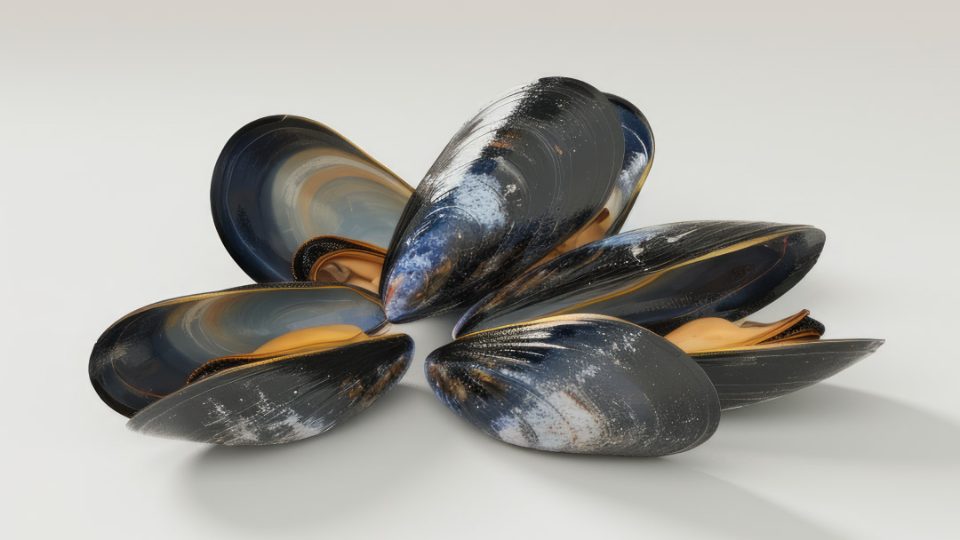
A new scientific study led by the Spanish Institute of Oceanography (IEO-CSIC) has highlighted the potential of Mediterranean mussel (Mytilus galloprovincialis) as powerful allies in the fight against pollution in port environments. The research, carried out in the Port of Palma, in Mallorca, Spain, demonstrates that these filter-feeding bivalves are capable of accumulating trace metals and microplastics, offering a promising nature-based solution for environmental restoration in degraded coastal areas.
“Results from this research can provide a baseline for the use of mussels as potential natural bioremediation tools which could be considered in future management plans of coastal areas in order to quantify and reduce anthropogenic pressures upon these.”
The study reflects a growing interest in harnessing biological processes to address marine pollution, especially in areas such as ports where water circulation is limited and contamination levels are often high.
Over three-month period, researchers deployed 350 mussels across several sites within the Port of Palma and at a control location outside the harbor. The mussels, collected from Menorca and acclimatised under controlled conditions, were later analysed for metal content and microplastic ingestion. The findings were clear: mussels retained considerable amounts of copper, zinc, lead and mercury, as well as microplastics. In fact, “88% of the individuals ingested microplastics”, confirming previous findings in the Balearic Islands.
Despite high mortality rates in some areas-likely influenced by unusually warm summer temperatures and poor water quality-the surviving mussels demonstrated a marked capacity to filter and sequester pollutants. This positions Mytillus galloprovincialis as a viable tool for biorestoration strategies in marine spatial planning.
“Zinc, Copper and Arsenic predominant in soft tissues of mussels deployed in a port area”, the authors explain, noting that zinc and arsenic levels were notably higher than in previous studies, suggesting a worsening pollution trend in the study area.
The presence of microplastics was also widespread, but interestingly, the highest average intake occurred not inside the port, but at the control site offshore. This could be due to stronger currents increasing exposure, or the fact that mussels in cleaner environments were in better physiological condition and able to filter more water-and with it, more contaminants.
While the immediate goal of the research was to assess pollution, the broader implication is clear: mussels could be internationally deployed in port areas to help remove contaminants from the water. As filter feeders, mussels naturally absorb both organic and inorganic particles. Their use in Nature-based Solutions aligns with EU Blue Growth and circular economy principles.
“Deployment of filter feeding organisms such as mussels can help to reduce impacts produced by anthropogenic activities”, the paper concludes.
Such applications could include installation of mussels lines in urban marinas or alongside aquaculture systems to improve water quality. In fact, a recent experiment cited in the study reports that “5.0 kg of mussels were successfully deployed in an urban marina system removing and repacking 239.9 to 145.9 microplastics and anthropogenic particles per day into their faeces”-a striking demonstration of the specie’s potential to act as biological filters.
Mussels are already one of Europe’s most important aquaculture products, with Spain along accounting for 40% of EU production. This opens up the possibility of integrating bioremediation with existing infrastructure, creating systems that are not only productive but also regenerative.
The authors acknowledge that more research is needed, particularly in understanding mortality drivers and the seasonal variability of pollutant uptake. Still, their work lays important groundwork for the inclusion of bivalves in long-term strategies to mitigate the impact of human activity on the marine environment.
Reference:
Carme Alomar, Xavier Capó, Beatriz Rios-Fuster, Patricia Bernárdez, Juan Santos- Echeandía, Salud Deudero. Are mussels accumulating trace metals and microplastics in port facilities? Marine Environmental Research. https://doi.org/10.1016/j.marenvres.2025.107263

Related

Latest In-depth
-
Clams more resistant to heat and Perkinsus: research paves the way for selective breeding
Padua, Italy, 16/10/2026 | University of Padua researchers explain to misPeces the findings presented at Aquaculture Europe 2026 and the steps needed to transfer them to hatcheries. Initial applications could emerge within the next two or three years, although the relationship between resistance, growth and other production traits still need to be assessed