Insect meals, single-cell proteins and microalgae are broadening the range of raw materials available to aquaculture, but they do not yet offer a universal and economically competitive replacement for fishmeal.
A study commissioned by the European Commission concludes that these ingredients have nutritional and environmental potential, although they remain constrained by cost, commercial-scale availability and regulatory barriers.
The economic comparison presented in the report reveals significant differences. Poultry by-products have the lowest theoretical cost, while Nannochloropsis oceanica biomass comes close to the reference price for fishmeal. Black soldier fly meal and single-cell proteins make the blend slightly more expensive, while Tenebrio molitor remains considerably costlier.
Cost and main constraints of alternative ingredients
| Ingredient | Fishmeal replacement | Estimated blend cost | Main advantage | Main limitation |
|---|---|---|---|---|
| Fishmeal | Reference | €1.47/kg | High nutritional value | Limited supply and volatile prices |
| Poultry by-products | 30% | €1.244/kg | Lower cost and circularity | Acceptance and restrictions on use |
| Nannochloropsis oceanica | 21.4% | €1.46/kg | Marine nutrients and omega-3 | Scale and processing |
| Black soldier fly meal | 40% | €1.57/kg | Use of secondary raw material streams | Cost and availability |
| Single-cell protein | 30% | €1.57/kg | Low land use | Energy consumption and scale |
| Tenebrio molitor meal | 40% | €2.42/kg | Strong protein profile | High cost |
The comparison should be interpreted with caution. Prices for some emerging ingredients are difficult to obtain and, in certain cases, were projected from growth in market value. Moreover, replacing a given quantity of fishmeal does not guarantee the same digestibility, amino acid composition, palatability or production response.
The constraints also differ between ingredients. Animal by-products offer availability and competitive pricing but face restrictions on use and commercial reluctance. Insects can make use of secondary raw material streams and reduce pressure on agricultural land, although their cost depends on larval feed and the scale achieved by the industry.
Single-cell proteins require energy for production, while microalgae still need improvements in productivity, harvesting and processing to compete widely with conventional marine ingredients. A raw material may perform well nutritionally in a trial yet remain unavailable at the volumes or prices required by a feed mill.
The report therefore points towards the gradual diversification of feed formulation rather than the complete replacement of conventional ingredients. For manufacturers, the advantage will lie in combining raw materials according to their price, availability, footprint and performance in each species.
For farms, the decisive factor will not be the cost of each ingredient in isolation, but how the resulting feed affects growth, feed conversion, health and the final cost per kilogram of fish produced.
Reference: Mosnier, P. et al. (2026). Study on Feed for Aquaculture – “Aquafeed”. Final Report. European Commission, CINEA. DOI: 10.2926/8461677.

Related

Latest In-depth
-
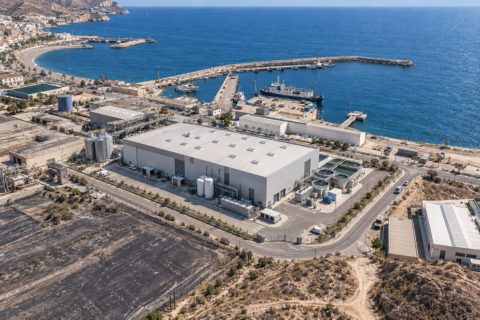
Ocean Aquaculture begins work on Spain hatchery designed to produce eight million greater amberjack juveniles a year
Almería, Spain, 9 September 2026 | The first phase will involve an investment of around €15 million and is expected to begin production in January 2028, supplying both the group’s future offshore farms and other Mediterranean producers