
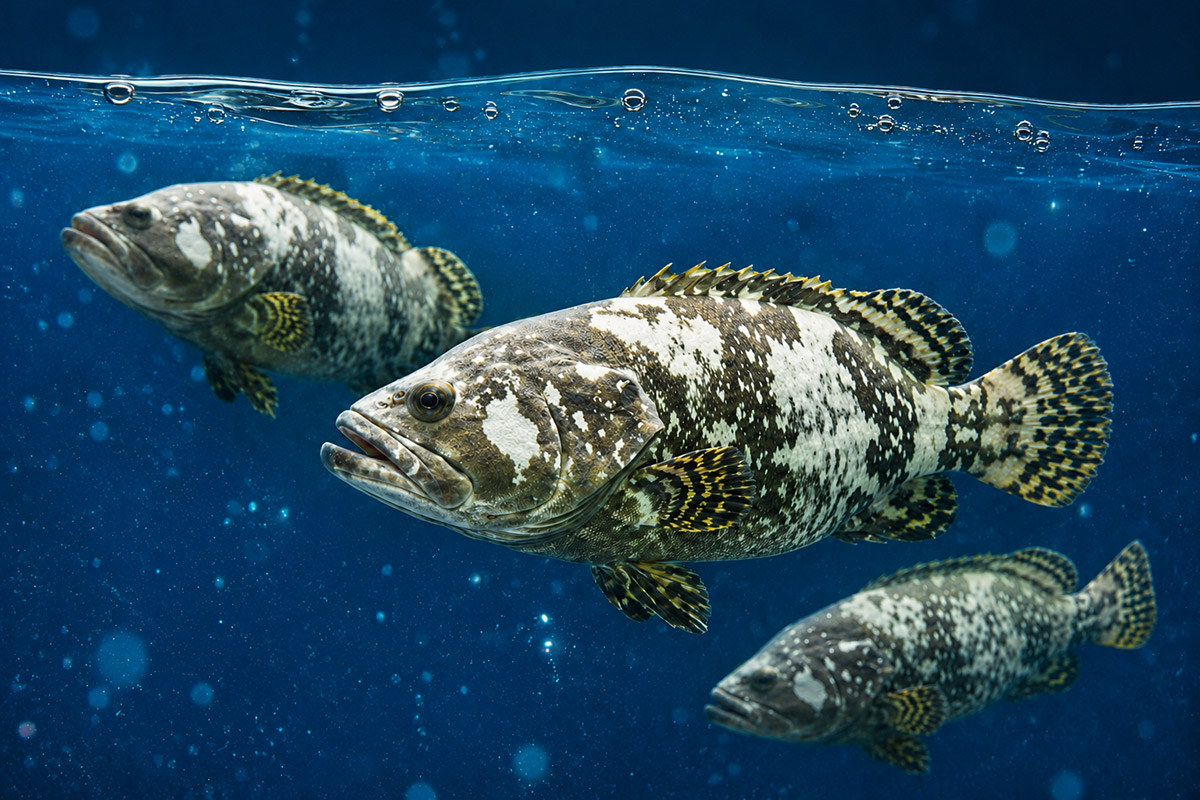
Oceanloop has decided to focus the development of its own European aquaculture farms on giant grouper (Epinephelus lanceolatus). The change particularly affects its Gran Canaria project, originally presented as a RAS facility designed to produce 2,000 tonnes of shrimp annually and now planned to achieve the same capacity with grouper.
The German company has announced financing of up to EUR 38.5 million, combining new equity from its shareholders and investors with a European Investment Bank debt facility.
However, most of this amount is not entirely new financing: in November 2024, the EIB had already announced a loan of up to EUR 35 million to expand Oceanloop’s operations in Germany and build the shrimp farm in Gran Canaria.
According to Oceanloop CEO Fabian Riedel explained to misPeces that the amended EIB facility amounts to EUR 32 million, of which approximately EUR 27 million is allocated to the planned Gran Canaria project, with the remainder supporting the Kiel facility. “The remaining financing is provided through equity from Oceanloop’s shareholders and investors,” he explained, adding that the company does not disclose the individual commitments made by Hatch Blue and Stolt Ventures.
The first stage of the expansion will take place in Strande, near Kiel, where grouper sales began in April 2026. Oceanloop expects the existing facility to supply between 20 and 30 tonnes annually and plans to begin constructing a farm with a capacity of approximately 250 tonnes before the end of 2026. The company expects this new facility to become operational in 2028.
Oceanloop’s planned development
| Facility | Announced capacity | Status |
|---|---|---|
| Existing farm in Strande, Kiel | 20–30 tonnes/year | Sales began in April 2026 |
| New Kiel farm | 250 tonnes/year | Construction expected to begin before the end of 2026 and operations in 2028 |
| Gran Canaria project | 2,000 tonnes/year | Permitting preparations under way; final investment decision not yet taken |
The Gran Canaria facility represents the subsequent scale-up phase. Oceanloop is preparing the permitting and environmental approval process, but the applications have not yet been formally submitted. “Our objective is to complete the required permitting procedures well ahead of the planned investment and construction phase,” Riedel said.
The final investment decision for Gran Canaria has not yet been taken. “Additional equity commitments for Gran Canaria are planned to be secured once the Kiel farm is operational,” the CEO explained. Oceanloop expects the required permits to be completed by that stage, allowing it to move into the larger project on the basis of the operational experience gained at the 250-tonne Kiel facility.
The shift towards giant grouper is intended to differentiate production through a high-value species targeting foodservice and specialist seafood distribution.
However, moving from an expected supply of 20–30 tonnes to a 2,000-tonne facility will first require Oceanloop to demonstrate that survival, growth, feed conversion, welfare and energy costs can remain competitive at commercial scale.

Related
Latest In-depth
-
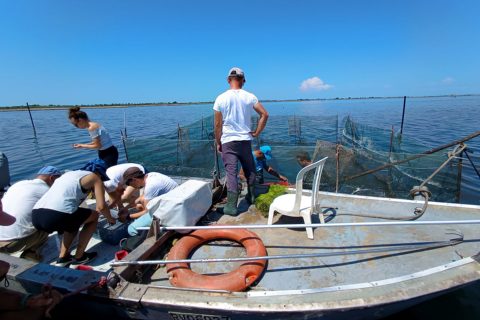
Clams more resistant to heat and Perkinsus: research paves the way for selective breeding
Padua, Italy, 16/10/2026 | University of Padua researchers explain to misPeces the findings presented at Aquaculture Europe 2026 and the steps needed to transfer them to hatcheries. Initial applications could emerge within the next two or three years, although the relationship between resistance, growth and other production traits still need to be assessed