
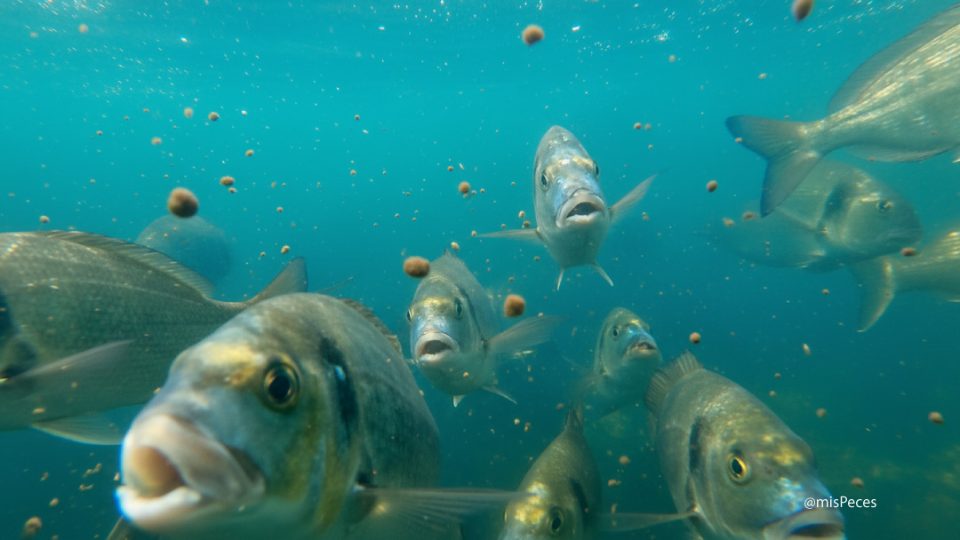
Fish behaviour before, during and after feeding is becoming a strategic source of data for intensive aquaculture. When fish respond strongly to feed, the system can maintain or adjust the ration. When activity declines, continuing to supply feed may no longer make sense.
Turning this observation, which has traditionally depended on the trained eye of farm staff, into an objective, repeatable measurement that supports decision-making goes beyond zootechnical management. In a recirculating aquaculture system, it can also help reduce feed waste, limit organic load and ease pressure on mechanical and biological filters.
Precision feeding requires advanced technologies such as computer vision, acoustic sensors, accelerometers, underwater cameras and machine learning models.
Each tool has its advantages and limitations. Acoustic systems can operate even under low-visibility conditions, but they can be costly and complex to interpret. Computer vision is more accessible and can analyse group behaviour patterns, although it must deal with turbidity, reflections, bubbles, splashing, high stocking densities and changes in lighting.
In the most advanced models, the best results are achieved by combining convolutional neutral networks, which are specialised in extracting local image patterns, with Vision Transformers, which can interpret the global context of the scene, and temporal analysis using LSTM networks, which makes it possible to track how activity evolves over several seconds.
In the study that serves as a starting point, video-level cross-validation reached an average accuracy of 96.16%, although the system’s ability to generalise will depend on the species, the facility, the system design and real operating conditions.
More than the standalone accuracy of the model, the most interesting aspect of this type of research is what it reveals about fish behaviour at the start of feeding, during the peak of appetite and when satiety begins to appears. Capturing this evolution is key to deciding whether feed delivery should be maintained, reduced or stopped.
Intelligent feeding is not about delivering feed with more technology, but about knowing when fish stop turning that feed into growth and start turning it into cost.
Each facility and each farmed species will require an adapted design. Lighting, tank geometry, camera position, feed type, management routine and fish behaviour according to health or environmental status can all affect data quality and system response.
Beyond biological performance across different species, the technology must be operationally integrated with existing feeders, sensors and farm management systems.
The question that matters to producers is whether it can do so robustly, affordably, with easy integration and with a demonstrable economic return.
This technology will complement the experience of farm staff, but it will not replace it. A skilled technician can interpret details that are still difficult to automate, such as behavioural changes linked to lower oxygen levels, temperature fluctuations, disease, stress, previous changes linked to lower oxygen levels, temperature fluctuations, disease, stress, previous handling or hierarchies within the batch.
The future of aquaculture feeding will not simply be automatic. It will be adaptive, connected to what the batch is expressing in real time.
The more technologically advanced a production system becomes, the more important it will be to connect the data generated by these sensors with concrete decisions: adjusting rations, anticipating problems, reducing losses and improving the stability of the production cycle.

Related

Latest In-depth
-
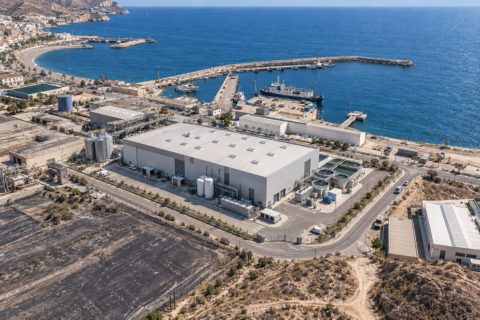
Ocean Aquaculture begins work on Spain hatchery designed to produce eight million greater amberjack juveniles a year
Almería, Spain, 9 September 2026 | The first phase will involve an investment of around €15 million and is expected to begin production in January 2028, supplying both the group’s future offshore farms and other Mediterranean producers