
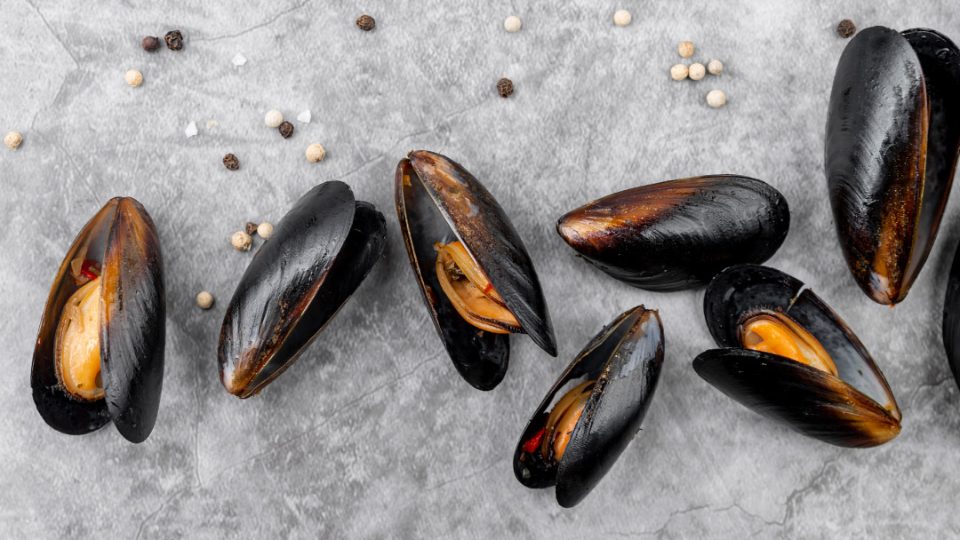
A study led by researchers from the Institute for Marine Research (IIM-CSIC) in collaboration with the University of Trieste, Italy, reveals how bivalve molluscs, such as mussels and clams, exhibit a remarkable diversification of Toll-like receptors (TLRs). The scientists link this diversification to the ability of these molluscs to detect a wide range of pathogens, giving them a crucial adaptive advantage in the marine environment.
TLRs are proteins that act as sensors for the immune system, recognising molecules associated with pathogens such as bacteria and viruses. Once activated, they trigger immune responses to fight infection. A unique and diverse expansion of these receptors has been identified in bivalves, enabling them to defend themselves against various threats in their environment.
This discovery has significant implications for aquaculture, as it could lead to the development of new strategies to increase disease resistance in molluscs, making their farming more efficient and sustainable. It also opens the door to biotechnological applications such as the creation of probiotics and immune-boosting treatments that reduce the need for chemical therapies in the aquaculture industry.
In addition, this knowledge could be applied to conservation projects aimed at protecting endangered shellfish species, helping to restore natural populations and maintain biodiversity in marine ecosystems. Bivalve molluscs play a vital role in maintaining ecological balance by filtering water.
This study, which combines marine biology, genetics and bioinformatics, highlights the importance of multidisciplinary approaches to understanding the immune systems of non-model organisms and their potential applications in biotechnology and conservation.
Next Steps
To help us understand more, future research should focus on how each TLR responds to specific pathogens.
It will also be crucial to investigate how environmental factors such as temperature, salinity and pollution affect the expression and function of TLRs.
Building on this research, studies could be extended to other bivalve species to identify evolutionary patterns and adaptations.
In addition, studies of the genetic variability and evolution of TLRs in different bivalve populations will be important to understand how these genes have adapted to different environments and pathogenic pressures.
Reference:
Gerdol, M., Moreira, R., Cruz, F., Gómez-Garrido, J., Vlasova, A., Rosani, U., Venier, P., Naranjo-Ortiz, M. A., Murgarella, M., Greco, S., et al. (2020). Massive gene presence-absence variation shapes an open pan-genome in the Mediterranean mussel. Genome Biology, 21, 275

Related

Latest In-depth
-
Clams more resistant to heat and Perkinsus: research paves the way for selective breeding
Padua, Italy, 16/10/2026 | University of Padua researchers explain to misPeces the findings presented at Aquaculture Europe 2026 and the steps needed to transfer them to hatcheries. Initial applications could emerge within the next two or three years, although the relationship between resistance, growth and other production traits still need to be assessed