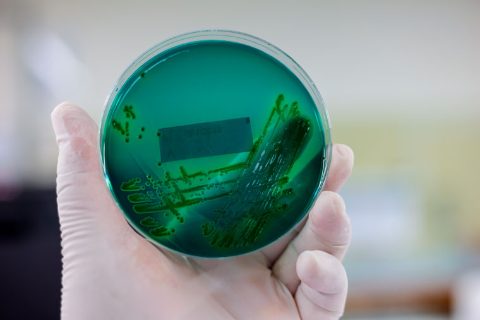
A team of researchers from Hassan II University of Casablanca, Morocco, and the University of Santiago de Compostela, Spain, has characterised in an article published in the journal Biocatalysis and Agricultural Biotechnology eight marine bacteria isolated from the deep Atlantic off the coast of Morocco, which have proven to be a source of natural bioactive compounds useful in aquaculture.
These bacteria are Alteromonas hispanica, Vibrio sp., Pseudoalteromonas sp., Cobetia marina, Staphylococcus haemolyticus, Planococcus maritimus, Idiomarina sp., and Pseudoalteromonas issachenkonii. The most promising, according to the researchers, is Alteromonas hispanica (strain B-35) as it exhibited the strongest antibacterial activity against the five aquaculture pathogens evaluated in the study: Vibrio anguillarum, Photobacterium damselae subsp. damselae, Aeromonas salmonicida, Edwardsiella tarda, and Lactococcus garvieae.
These pathogens, as explained in the article, are associated with severe diseases in fish, such as haemorrhagic septicaemia, necrosis, and organ lesions, which can result in high mortality rates in farmed fish species.
The inhibition diameters observed in vitro with this bacterium ranged from 20 to 26 millimetres.
According to the researchers, all the characterised bacteria produce molecules with antioxidant and antibacterial properties that have the potential to combat infections in fish caused by pathogens.
As the researchers point out, the compounds produced by these bacteria are a possible "ecological solution" to replace other synthetic therapeutic agents, thereby reducing the spread of bacterial resistance. These compounds have also demonstrated antioxidant properties that can protect fish from oxidative stress, improving their immune system and growth.
The experiments conducted show that these bacteria do not exhibit haemolytic activity or gelatin production, indicating that they are non-pathogenic and could potentially be used as probiotics.
The next steps before any of these characterised bacteria can become a solution in aquaculture involve in vivo studies, safety tests to ensure their use as probiotics or treatments in fish, improving cultivation conditions, and exploring possible encapsulation or administration methods.
Reference:
Asmaa Chbel, Manuel Rey-Méndez, Juan L. Barja, Aurelio Serrano-Delgado, Abdelaziz Soukri, Bouchra El Khalfi. Characterization of novel marine bacteria isolated from deep Atlantic Ocean in Morocco as a source of natural bioactive compounds to control infections in aquaculture. Biocatalysis and agricultural biotechnology.

Related

Latest In-depth
-
Clams more resistant to heat and Perkinsus: research paves the way for selective breeding
Padua, Italy, 16/10/2026 | University of Padua researchers explain to misPeces the findings presented at Aquaculture Europe 2026 and the steps needed to transfer them to hatcheries. Initial applications could emerge within the next two or three years, although the relationship between resistance, growth and other production traits still need to be assessed