
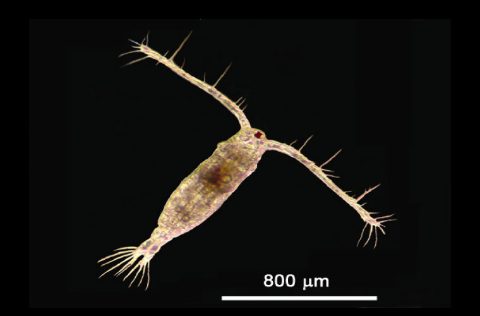
Feeding during the earliest stages of development remains one of the main challenges facing marine fish hatcheries. Although rotifers and Artemia form the basis of many larval feeding protocols, copepods are attracting interest because of their nutritional characteristics and their potential to complement conventional live feeds. However, promising experimental results do not necessarily mean that a species can be produced reliably, safely and economically on a commercial scale.
A scientific review published in Frontiers in Marine Science, conducted by researchers affiliated with the University of Vigo, the Spanish Institute of Oceanography (IEO-CSIC) and research institutions in Peru and Chile, examined 199 scientific publications on calanoid copepods used or investigated as live feed in marine fish larviculture. The aim was to assess not only their potential biological advantages but also the maturity of the available evidence supporting their adoption in hatcheries.
The researchers compared seven species using an evidence maturity index covering different aspects of technological development. Acartia tonsa achieved the highest score, at 95.8 out of 100, followed by Parvocalanus crassirostris and Pseudodiaptomus annandalei, both scoring 83.3. These differences reflect the accumulated scientific and technological knowledge, but do not mean that the highest-ranked species is necessarily the most suitable for every hatchery or fish species.
One of the review's main findings is that the nutritional value of a copepod and its commercial viability as a live feed are two different considerations. Regular use in a hatchery requires reproducible mass-production protocols, a clear understanding of culture and storage conditions, appropriate biosecurity measures and demonstrated performance in larval trials. These requirements must also be considered alongside a decisive factor for businesses: the cost of producing sufficient quantities of live feed with consistent quality.
This distinction is particularly relevant for hatcheries producing gilthead seabream, European seabass and other marine fish species seeking to improve their first-feeding protocols. Copepods could complement rotifers and Artemia, but their introduction should be supported by measurable improvements in production performance, such as higher larval survival, more uniform growth or better juvenile quality. The review does not demonstrate that any of the species assessed can deliver these benefits under all farming conditions.
From a business perspective, the study provides a framework for prioritising research and development before investing in new live-feed production systems. The question is no longer simply which copepods offer the most promising biological characteristics, but which have sufficient technical evidence to support reliable commercial production. For hatcheries, this assessment could help distinguish technologies approaching practical application from those that still require further validation, scaling-up and economic evaluation.
Scientific reference: Native calanoid copepods for marine fish larviculture: a systematic review and evidence-maturity assessment. Frontiers in Marine Science, published 21 October 2026. DOI: 10.3389/fmars.2026.1989369.

Related

Latest In-depth
-
Protein hydrolysates: why they are not all the same
Global, 9 November 2026 | Trials point to promising applications, but each product needs to be characterised and validated on its own merits