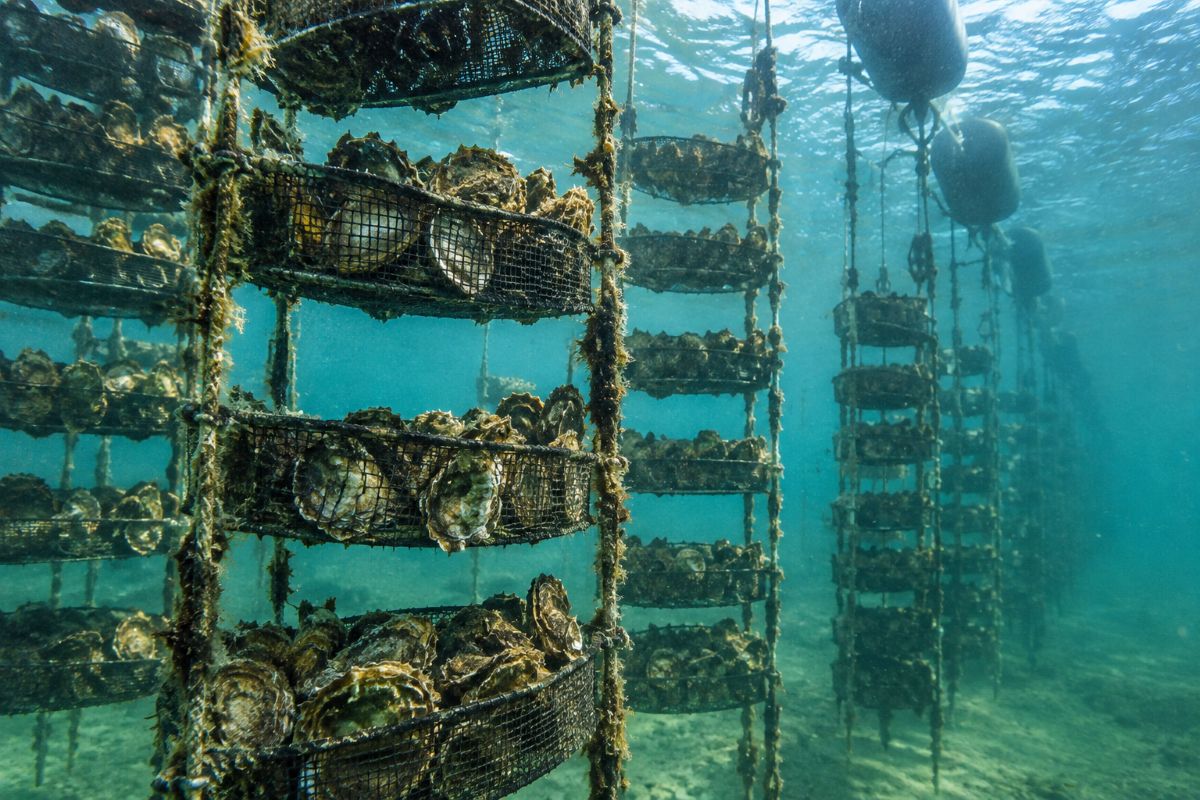
The ability of oysters to build calcium carbonate shells and influence biogeochemical cycles has fueled interest in incorporating oyster farming into blue carbon strategies. However, a new scientific review warns that an oyster farm cannot automatically be considered a carbon sink, and that any climate-related claim requires an assessment of the ecosystem’s overall carbon balance.
Several processes operate simultaneously and in different directions. Shell formation lock carbon into calcium carbonate, but the calcification process itself can release CO2. This is accompanied by oyster respiration, particle filtration, the production and degradation of organic matter, and exchanges of carbon between the water, sediments and atmosphere.
The authors organise these processes into four interconnected mechanisms – the carbonate, biological, microbial and solubility pumps – and point out that the net outcome depends on factors including hydrodynamics, primary productivity, temperature, sediment characteristics, stocking density and farming practices. As a result, two apparently similar oyster farms could have different carbon balance.
This variability has business implications. As aquaculture seeks to quantify its ecosystem services and potentially access blue finance or carbon-related mechanisms, the amount of shell produced cannot simply be converted into tonnes of CO2 sequestred. Carbon accounting needs to include both the processes that store carbon and those that return it to the system.
The review proposes moving towards tiered monitoring, reporting and verification (MRV) protocols, allowing the intensity and complexity of measurements to be matched to their intended purpose.
A basic sustainability assessment would not necessarily require the same level of evidence as a project seeking to demonstrate climate additionally or generate verifiable carbon units.
Scientific reference: Carbon Cycling in Oyster Ecosystems: Mechanisms, Evidence, and MRV Pathways. Reviews in Aquaculture (2026). DOI: 10.1111/raq.70211

Related

Latest In-depth
-
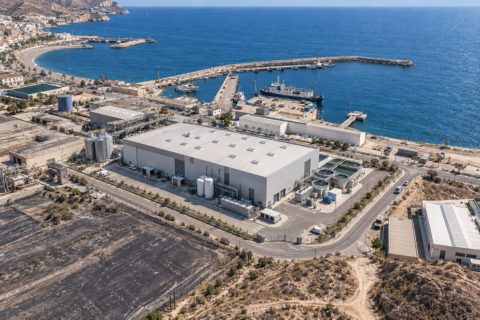
Ocean Aquaculture begins work on Spain hatchery designed to produce eight million greater amberjack juveniles a year
Almería, Spain, 9 September 2026 | The first phase will involve an investment of around €15 million and is expected to begin production in January 2028, supplying both the group’s future offshore farms and other Mediterranean producers