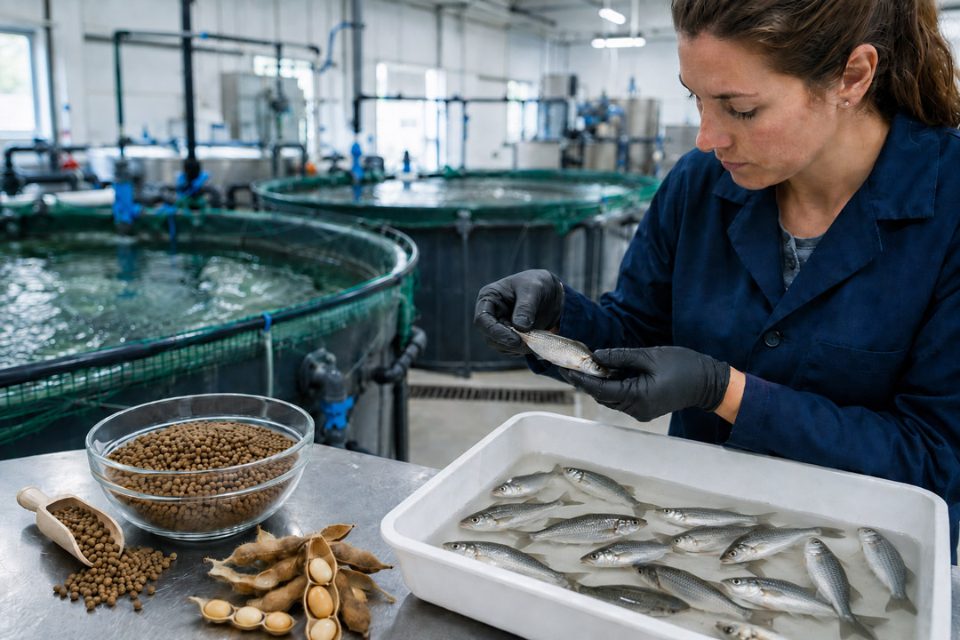
Controlling the proportion of males and females can have production value in aquaculture species where the sexes differ in growth, maturation or commercial value. In this context, soy isoflavones, and genistein in particular, are attracting interest because of their ability to interact with the oestrogenic pathways involved in fish sex differentiation.
Available evidence shows that they can alter gonadal development, although the outcome depends strongly on the species, dose and timing of exposure.
The best documented case is Japanese eel (Anguilla japonica). In a trial conducted during the sex differentiation stage, a diet containing 10 grams of isoflavones per kilogram of feed produced 91.6% females, while 50 grams per kilogram increased the proportion to 96.6%.
Males clearly predominated among untreated fish. Experiments with individuals compounds also identified genistein as considerably more effective than daidzein and showed changes in the expression of genes associated with ovarian and testicular development.
The response, however, cannot automatically be extrapolated to other fish. In channel catfish (Ictalurus punctarus), genistein also altered sex differentiation, but resulted in a higher occurrence of males and intersex individuals. In Russian sturgeon (Acipenser gueldenstaedtii), meanwhile, treatments with phytoestrogens had much more limited effects on the final sex ratio, and some were associated with gonadal abnormalities.
These findings show that isoflavones should not simply be regarded as feminising agents, but rather as componds capable of interacting in different ways with the mechanisms controlling sexual development.
For Mediterranean aquaculture, one of the most interesting question concerns Europea seabass (Dicentrarchus labrax). Sex determination in this species results from the interaction between genetics and the environment, and factors such as temperature during early development can significantly influence the proportion of males and females.
The oestrogen pathway is also known to play a direct role in female differentiation, while genistein has been shown to activate all three nuclear oestrogen receptors in the species.
However, it has yet to be demonstrated that adding genistein to feed during sex differentiation can controllably increase the proportion of females.
There are also indications of biological activity in Senegalese sole (Solea senegalensis). Experiments during early developmental stages have shown that genistein can temporarily alter markers associated with oestrogenic and thyroid signalling.
These studies did not examine sex ratios and therefore cannot be interpreted as evidence of feminisation, but they reinforce the idea that phytoestrogens associated with plant ingredients can interact with sensitive hormonal systems during early development.
For now, isoflavones should be regarded as an experimental tool for influencing sex differentiation rather than a technology ready for use on commercial farms.
The results in Japanese eel demonstrate that, at least in certain species, feeding can be used to steer sexual development, while findings in catfish and sturgeon show that there is no universal response.
In Mediterranean species such as European seabass, the next step would be to determine whether nutritional intervention during the appropriate developmental window can generate a predictable and commercially advantageous sex ratio, while also assessing growth, welfare, persistence of the effect and any long-term reproductive consequences.

Related

Latest In-depth
-
Clams more resistant to heat and Perkinsus: research paves the way for selective breeding
Padua, Italy, 16/10/2026 | University of Padua researchers explain to misPeces the findings presented at Aquaculture Europe 2026 and the steps needed to transfer them to hatcheries. Initial applications could emerge within the next two or three years, although the relationship between resistance, growth and other production traits still need to be assessed