The intensity of the inflammatory response may help explain differences in virulence between betanodavirus variants responsible for viral nervous necrosis (VNN), a disease affecting commercially important Mediterranean aquaculture species, including European sea bass and gilthead sea bream.
This is one of the main findings of a study conducted by researchers at the University of Málaga and the French National Research Institute for Agriculture, Food and Environment (INRAE), published in Transboundary and Emerging Diseases.
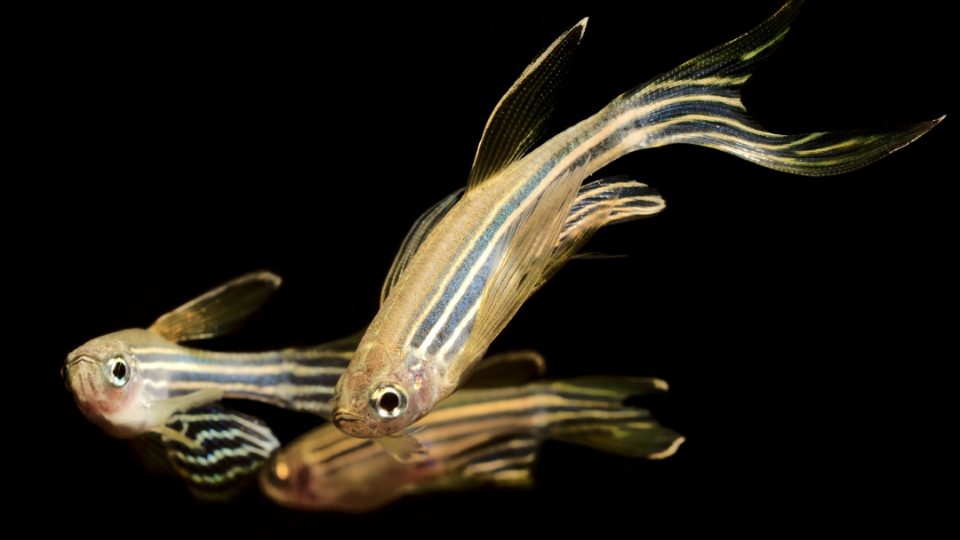
The research team used zebrafish (Danio rerio) larvae to compare infections caused by three viral variants: RGNNV, SJNNV and the RGNNV/SJNNV reassortant. All three were able to replicate in this experimental model, although their replication levels, disease severity and host immune responses differed.
RGNNV showed the highest viral replication and caused the most pronounced clinical signs, together with a stronger inflammatory response. By contrast, SJNNV and RGNNV/SJNNV infections resulted in lower mortality and more limited activation of certain inflammatory pathways.
The researchers also identified differences in the expression of antiviral response genes, particularly irf3 and rtp3, and in neutrophil recruitment, an important component of the early innate immune response.
Infection route and developmental stage also matter
The study also investigated RGNNV infection through immersion exposure in larvae and intramuscular injection in juvenile zebrafish.
Larvae exposed to the virus by immersion showed an initial increase in viral genetic material, followed by apparent control of the infection. No clinical signs or mortality were observed during the experimental period.
In juveniles, viral genetic material was detected in the head, but there was no evidence of viral replication. These findings suggest that susceptibility may also depend on developmental stage and route of exposure.
Relevance for Mediterranean aquaculture
Viral nervous necrosis remains a significant health concern for several farmed marine fish species. However, the virulence of individual betanodavirus variants also depends on the host species.
RGNNV is particularly virulent in European sea bass, whereas SJNNV and certain reassortant variants can cause severe infections in other species, including Senegalese sole and gilthead sea bream.
According to the authors, zebrafish offer a useful experimental model for investigating the mechanisms underlying susceptibility and resistance to betanodavirus infections.
Although the findings cannot be directly extrapolated to commercial fish farms, they provide further insight into virus–host interactions and may support future research aimed at developing more effective disease prevention strategies.
Scientific reference: Moreno, P. et al. (2026). Zebrafish Reveals Genotype-Specific Differences in Betanodavirus Infection and Host Responses. Transboundary and Emerging Diseases. https://doi.org/10.1155/tbed/8111758

Related

Latest In-depth
-

Enrico Bachis: Fishmeal and fish oil production to recover in 2027
Sardinia, 16 November 2026 | global fishmeal production will reach 4.44 million tonnes in 2026, the lowest figure in IFFO’s historical series and fish oil production is expected to be around 1.15 million tonnes, its lowest level since 2016