
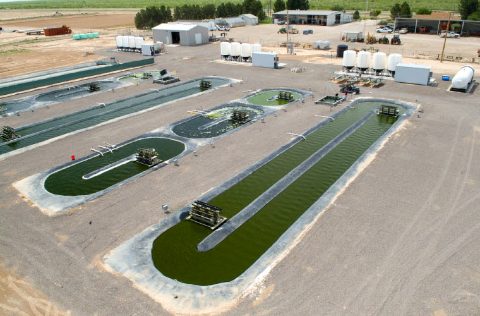
A new study led by the Institute of Marine Sciences (ICM-CSIC) has provide new insights into how the microbial communities that coexist with microalgae can influence the health and productivity of large-scale cultivation systems. Published in Bioresources Technology, the research could help pave the way towards more generation of green biomass for biofuels, nutraceuticals and cosmetics.
Over two eight-month periods, researchers closely monitored two raceway-type reactors-a common setup in industrial algae farming-both seeded with the green microalga Desmodesmus armatus. One reactor was fed with urban wastewater, while the other used clean water supplemented with fertilisers. Sampling was carried out three times a week, enabling a high-resolution temporal spapshot of how the microbial population evolved over time.
Using high-throughput DNA sequencing (metabarcoding) of 16S and 18S genes, the team identified a wide array of bacteria, fungi and other microorganisms. The makeup of these microbial communities changed depending on the condition of the culture-with clear differences between healthy systems, where the microalgae was dominant, and those under stress. The study uncovered up to ten potential ecological interactions between the microalga and its microbiome.
In favourable conditions, researchers found positive associations with microorganisms such as Geminocystis, Thiocapsa, Anhiella, and Bosea. However, under less stable conditions, potential pathogens such as Mycobacterium and parasitic fungi like Rozellomycota, Aphelidium desmodesmi and Rhizophydium became more prevalent.
The results show that “about 10 potential ecological interactions between Desmodesmus armatus and other microbies” were observed, most of which were beneficial. However, the study also highlighted consistent negative associations with Mycobacterium and certain fungi. As lead author Judith Traver-Azuara puts it, “our results show that it is not enough to focus solely on the microalga; its microbiome plays a key role that we must understand if we want to achieve stable and productive cultures”.
One particularly interesting findings was that the reactor fed with wastewater demonstrated greater microbial diversity and, in one of the experimental campaigns, even higher productivity. The researchers point out that this kind of data can be used to establish microbial profiles linked to healthy on failing cultures, serving as an early-warning system to help prevent breakdowns in production.
Some fungal species, the note, even appeared to shift roles depending on the environmental context-supporting the algae under certain conditions and harming them under others. This highlights just how dynamic and complex microbial interactions in algae system can be.
The research forms part of the European Prodigo project, and also received support from INCEPTION, a Spanish State Research Agency project focused on the genomic characterization of microalgae cultures. By combining microbial ecology, biotechnology algae production systems- a growing area of interest for both environmental and commercial applications.
Reference:
Traver-Azuara, J., Llamas, B., Martínez-Pérez, C., Quesada, A., & Gich, F. (2025). Microbiome dynamics in large-scale outdoor algal cultures: Associations between microbial diversity and Desmodesmus armatus productivity. Bioresource Technology, 401, 129996. https://doi.org/10.1016/j.biortech.2024.129996

Related

Latest In-depth
-
Clams more resistant to heat and Perkinsus: research paves the way for selective breeding
Padua, Italy, 16/10/2026 | University of Padua researchers explain to misPeces the findings presented at Aquaculture Europe 2026 and the steps needed to transfer them to hatcheries. Initial applications could emerge within the next two or three years, although the relationship between resistance, growth and other production traits still need to be assessed