The Kingfish Company reported clear improvements in its production and commercial performance during the first quarter of 2026, although it still faces several financial and operational challenges before achieving sustainable profitability.
The company produced 773 tonnes of Yellowtail Kingfish (Seriola lalandi) between January and March, a 53% increase compared with the same period last year.
Its economic feed conversion ratio (eFCR) improved from 1.9 to 1.47, while sales volume increased by 24% to 714 tonnes. Average revenue per kilogram also rose slightly, from €12.9/kg to €13.2/kg.
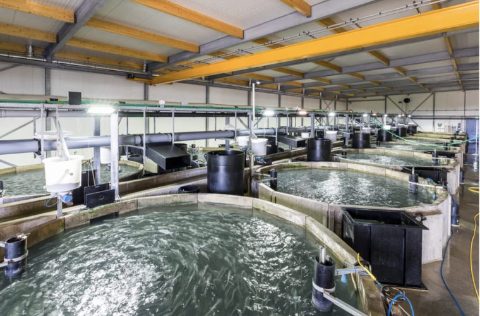
These figures point to meaningful technical progress at the company’s Kingfish Zeeland RAS facility, particularly in feed efficiency, production planning and its focus on larger fresh fish.
In land-based marine aquaculture, where fixed-cost absorption depends heavily on effective utilisation of installed capacity, improvements in these indicators are an encouraging sign.
The financial picture, however, remains more cautious. The company’s 2025 figures are preliminary and unaudited. Revenue increased by 29% to €35.8 million, compared with €27.7 million in 2024. Nevertheless, operational EBITDA remained negative at €-3.7 million, compared with €3.4 million in the previous year.
During 2025, Kingfish produced 2,576 tonnes and sold 2,649 tonnes, a difference that may reflect sales of biomass harvested and stored in previous periods.
The company highlighted that performance improved significantly during the second half of the year, with higher gross margin per kilogram and a reduction in operational losses per kilogram compared with both the first half of 2025 and the previous year.
Its commercial strategy is now fully focused on Europe. Since October 2025, Kingfish has discontinued fresh product sales in North America due to unfavourable tariff conditions and the weakness of the US dollar, concentrating instead on markets where it believes it has a structural competitive advantage.
Another important development is the increase in downgraded fish – fish that fail to meet the intended commercial quality specifications and therefore achieve lower market prices – observed since May 2026. The company is investigating the underlying causes and has implemented corrective measures aimed at limiting the impact on performance and value recovery.
Looking ahead, Kingfish’s priorities remain increasing facility utilisation, improving efficiency and progressing towards positive EBITDA and operating cash flow. While the largest results demonstrate operational and commercial progress, profitability still depends on achieving higher production volumes and maintaining strong financial discipline.
Kingfish continues to provide an important benchmark for assessing the development of industrial-scale marine RAS farming in Europe. The publication of its audited results later this year should offer a clearer indication of whether the operational improvements achieved in 2026 are beginning to translate into a more robust financial performance.

Related


Latest In-depth
-
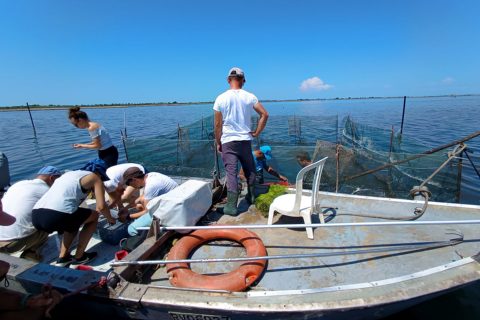
Clams more resistant to heat and Perkinsus: research paves the way for selective breeding
Padua, Italy, 16/10/2026 | University of Padua researchers explain to misPeces the findings presented at Aquaculture Europe 2026 and the steps needed to transfer them to hatcheries. Initial applications could emerge within the next two or three years, although the relationship between resistance, growth and other production traits still need to be assessed