
Disruptive technology based on Artificial Intelligence, as in other industries and aspects of our lives, promises to transform the aquaculture sector and is proposed as a tool to optimize and revolutionize everything from improving fish health to enhancing the operational efficiency of aquaculture farms.
The importance of AI in aquaculture lies in its ability to analyze large volumes of data in real-time, allowing fish farmers to make informed and precise decisions. This is essential in an environment where factors such as water quality, feeding, and fish health must be constantly monitored and adjusted to ensure sustainable and profitable production. AI facilitates the automation of critical processes, such as early disease detection, accurate fish identification, and optimization of feeding regimes, significantly reducing the risk of losses and improving animal welfare.
These technologies also enable more efficient management of resources, such as water and feed, helping to minimize the environmental impact of aquaculture. The ability to predict problems before they occur and adjust farming conditions accordingly is one of the main advantages that AI offers fish farmers, promising a more sustainable and resilient future for the industry.
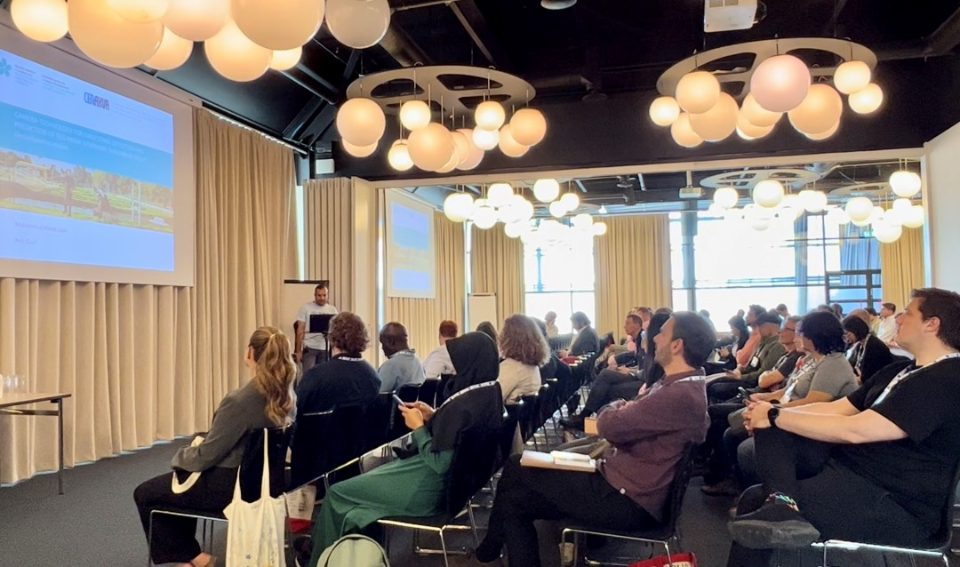
AI not only improves operational efficiency, as demonstrated these days in Copenhagen, but also opens new opportunities for innovation in aquaculture. For example, the use of advanced algorithms for genetic selection and selective breeding allows producers to develop species more resistant to diseases and adapted to various environmental conditions. This AI-driven approach could lead to significant advances in the production of key species such as gilthead sea bream, sea bass, and trout, among others.
Among the possible applications, the ZiD-AI tool stands out for morphometric and behavioral analysis of fish. Developed for monitoring adult zebrafish, this technology uses advanced AI algorithms, eliminating the need for invasive methods. As researchers have pointed out, this not only improves fish welfare but also provides precise and real-time data on animal health and behavior, which is of great importance for informed decision-making in aquaculture management.
On the other hand, the Aqusens platform uses holographic microscopy and AI algorithms to detect and quantify pathogens and microplastics in water samples. By early identification of potentially dangerous contaminants or pathogens, it allows aquaculturists to take rapid mitigation measures, thereby improving the sustainability and productivity of their operations.
In the case of enhanced selective breeding, the presentation "Catch the Wave" proposes optimizing genetic improvement programs through image analysis and the evaluation of fish characteristics, such as swimming style. By using neural network models, researchers can identify better candidates for breeding based on desirable traits, such as rapid growth or disease resistance. As they point out, this not only accelerates the selection process but also increases the efficiency and effectiveness of fish farming.
The technology based on Planktoscope demonstrates how Artificial Intelligence can be applied to monitor multirophic aquaculture systems at a micro level. According to the researchers, this approach allows for more precise management of aquatic ecosystems, ensuring that environmental conditions remain optimal for all species involved in these complex systems. The ability to track detailed changes in the aquatic ecosystem helps aquaculturists maintain a balanced and healthy environment, promoting sustainable practices.
Other notable applications of Artificial Intelligence in aquaculture include models that improve feeding and reduce waste, and the optimization of water quality.
In short, the various approaches presented at Aqua 2024 highlight how, as technology evolves, it will integrate better into aquaculture, promising to open new frontiers for the sustainable production of aquatic food.

Related

Latest In-depth
-
Clams more resistant to heat and Perkinsus: research paves the way for selective breeding
Padua, Italy, 16/10/2026 | University of Padua researchers explain to misPeces the findings presented at Aquaculture Europe 2026 and the steps needed to transfer them to hatcheries. Initial applications could emerge within the next two or three years, although the relationship between resistance, growth and other production traits still need to be assessed