
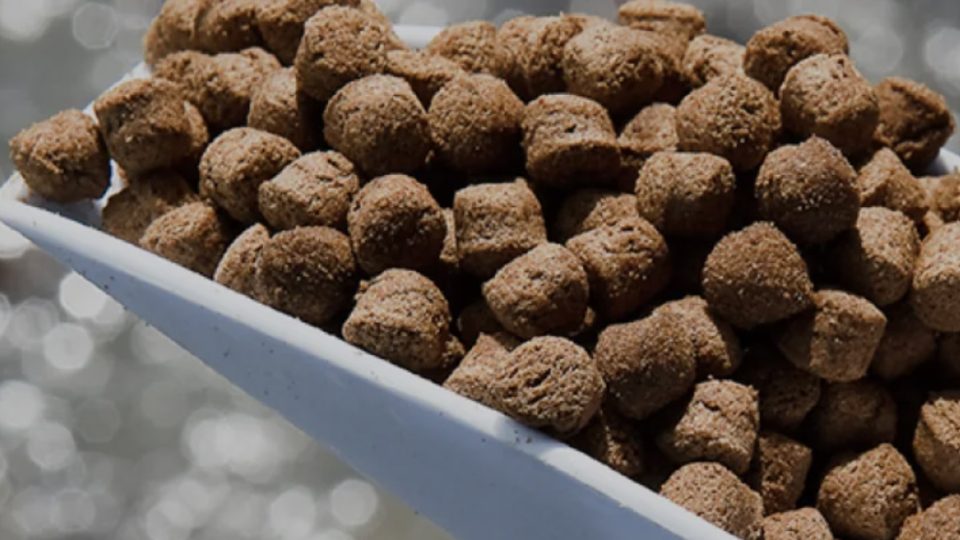
Aquaculture in moving towards a new generation of functional feeds in which the effectiveness of natural additives such as turmeric, ginger, probiotics, postbiotics and enriched alternative ingredients will depend less on their natural origin and more on their formulation, stability and proven production benefits.
The challenge is no longer simply to identify promising bioactive compounds, but to incorporate them into feed at the right dosage, preserve their activity during processing and demonstrate measurable improvements in growth, feed conversion, survival and stress resilience.
Recent studies point in the same direction. In functional nutrition, more is not necessarily better.
In whiteleg shrimp (Litopenaeus vannamei), the way turmeric was processed influenced its immunostimulatory effect against Vibrio parahaemolyticus. A blending method derived the best overall results, achieving a lower feed conversion ratio and higher phagocytic activity.
Dosage also matters

Another trial in whiteleg shrimp found that combining Lactobacillus sp. with 5 grams of turmeric meal per kilogram of feed improved growth, survival and feed efficiency.
However, increasing the inclusion level to 15 grams per kilogram failed to deliver additional benefits and reduced efficiency.
Ginger (Zingiber officinale) reinforces the same conclusion. A recent review in fish and shrimp found that its effects depend on the form used – extract, powder or essential oil.
Extracts appear to provide more consistent responses, whereas essential oils may cause adverse effects at certain inclusion levels, including intestinal alterations and physiological stress.
The same principle applies to postbiotics and phytogenic additives, whose effectiveness depends on composition, stability and interaction with the cultured species.
As a result, the industry is shifting away from the generic concept of “natural additives” towards more integrated strategies based on microbial metabolites, plant extracts and encapsulation technologies.
Functionalisation is also extending to alternative ingredients. In juvenile Clarias gariepinus, omega-3-enriched black soldier fly larvae meal replaced up to 75% of fishmeal while improving growth, survival and physiological parameters.
However, complete replacement reduced performance, highlighting the need to define optimal inclusion thresholds and avoid nutritional imbalances.
To move towards commercial application, the sector will need to address three key challenges: standarising ingredient composition, ensuring stability during feed manufacturing and validating performance under commercial farming conditions.
The future of functional aquafeeds will not depend on adding more natural additives, but on knowing which ones to use, in what form, at what dosage, with what stability and for which production objective.

Related

Latest In-depth
-
Clams more resistant to heat and Perkinsus: research paves the way for selective breeding
Padua, Italy, 16/10/2026 | University of Padua researchers explain to misPeces the findings presented at Aquaculture Europe 2026 and the steps needed to transfer them to hatcheries. Initial applications could emerge within the next two or three years, although the relationship between resistance, growth and other production traits still need to be assessed