
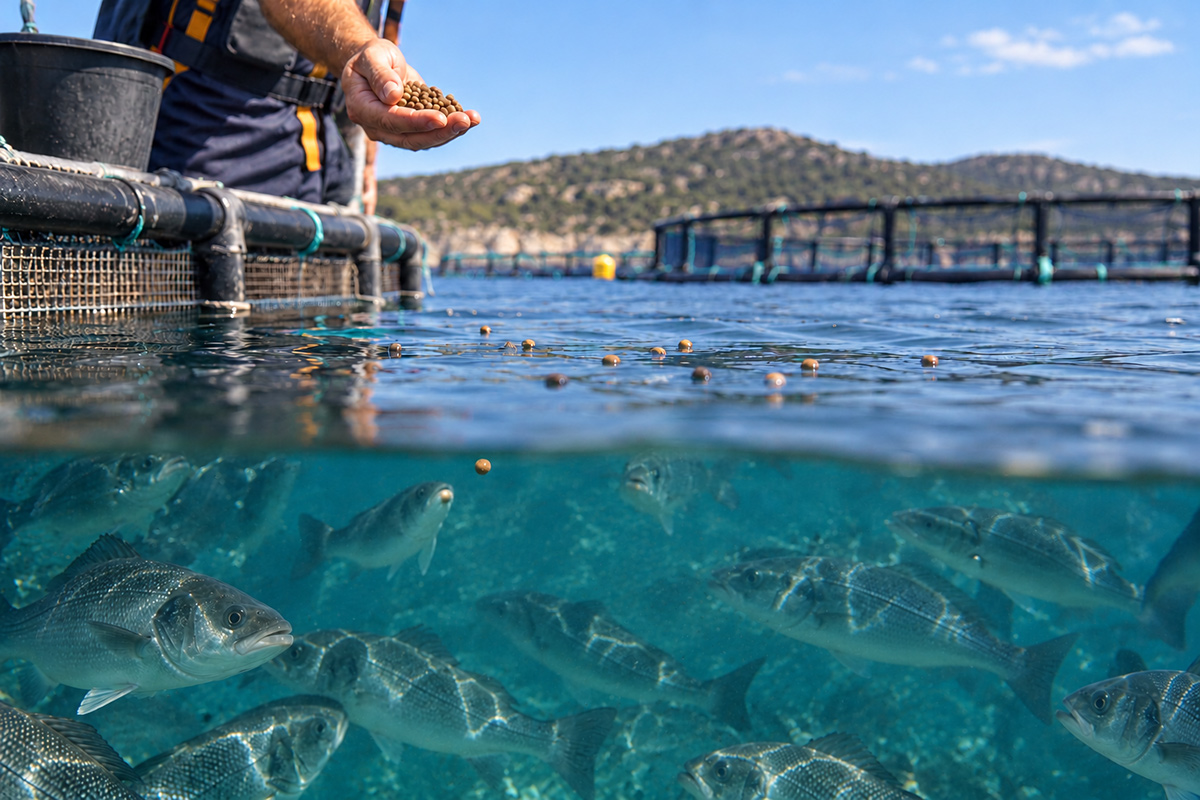
Over the past year, salmon farming has come under scrutiny over fish welfare, the environmental impact of farms and the transparency of some certification schemes. A few weeks ago, more than 120 chefs from 26 countries, signed an open letter calling for salmon raised in sea cages to be removed from menus. The initiative is part of the Off The Table campaign, which argues that production should avoid harming wild fish and marine ecosystems.
The latest debate was sparked by the Financial Times on 15 October, with its report “Farmed salmon now being raised on chicken”. According to the newspaper, Lerøy is already using poultry by-products at all its marine farms, Grieg Seafood has introduced them and SalMar is testing them. The paper also reported plans by Mowi to introduce them in Norway and Scotland, citing people familiar with its intentions.
The report prompted an immediate response in Scotland. Salmon Scotland said that no producer in the country was then using poultry-derived proteins and that feed ingredients were selected in response to customer requirements. The statement described current practice but did not clarify the plans attributed to Mowi.
The report also highlighted differences between retailers: Sainsbury’s prohibited these ingredients in feed for its own-label salmon, while Waitrose said it did not allow salmon it sells to be fed poultry protein.
Does this mean consumers reject the ingredient? The available data suggest a less uniform response. A survey presented at Aquaculture Europe 2026 asked 2,569 salmon consumers in France, the UK and Germany whether they would be willing to buy fish fed different raw materials. For poultry meal, stated willingness to buy was 40% in France, 62% in the UK and 63% in Germany. These are responses about salmon and stated purchase intentions, not evidence of actual buying behaviour or a prediction of how consumers would respond to sea bream or sea bass.
Consumer perception is only part of the picture. Nofima is studying the effects of long-term feeding with poultry meal on salmon performance, health and quality. The presence of an ingredient alone is not enough to assess the quality of the feed or the fish: data are needed on the ingredient, its function in the diet and the results achieved.
In the European Union, processed animal proteins derived from poultry may be used in aquafeeds subject to specific conditions. Fish labels must provide information such as the species, production method and farming area, but do not have to detail the feed composition.
Public disclosures by some feed manufacturers supplying the Mediterranean sector list poultry-derived raw materials. However, these documents do not show which commercial formulations contain them.
If the debate were to shift from salmon to these species, producers and feed manufacturers would need to explain, with evidence, which raw materials are used, why they are chosen and how their origin is controlled. The sector should be ready to respond clearly and with evidence.

Related

Latest In-depth
-
Clams more resistant to heat and Perkinsus: research paves the way for selective breeding
Padua, Italy, 16/10/2026 | University of Padua researchers explain to misPeces the findings presented at Aquaculture Europe 2026 and the steps needed to transfer them to hatcheries. Initial applications could emerge within the next two or three years, although the relationship between resistance, growth and other production traits still need to be assessed