The adoption of new aquafeed raw materials will depend less on their sustainability credentials on their ability to compete with established ingredients in terms of cost, availability and production performance.
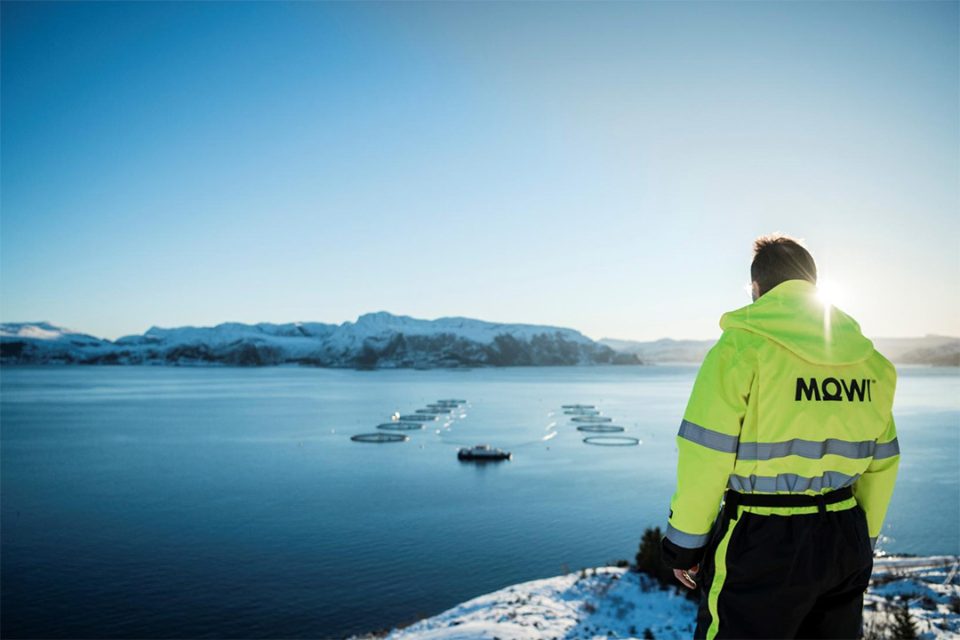
This is the position taken by Mowi, the world’s largest producer of Atlantic salmon, which harvested nearly 559,000 tonnes of fish and produced more than 587,000 tonnes of feed in 2025.
At this scale, the inclusion of new ingredients is no longer an experimental exercise but a strategic decision affecting supply security, cost stability and profitability across the entire value chain.
In its Salmon Farming Industry Handbook 2026, Mowi notes that salmon feed formulations have changed dramatically over recent decades. While diets in the 1990s relied heavily on fishmeal and fish oil, today’s formulations are far more diversified.
In 2025, feeds used by the company contained approximately 16% fishmeal and 11% fish oil, with the remainder coming from plant ingredients, animal by-products and emerging raw material sources.
Mowi believes that traditional marine ingredients will remain strategically important because of their nutritional profile, particularly as sources of EPA and DHA. However, the company also acknowledges that future aquaculture growth will require new sources of proteins and lipids capable of complementing conventional marine sources.
Among the alternatives highlighted by Mowi are microbial fermentation-derived proteins, insect-based ingredients, raw materials produced through carbon capture and utilisation processes, forestry-derived resources and other emerging feed sources currently under development.
Nevertheless, the handbook adopts a markedly more cautious tone than that often found in promotional narratives surrounding alternative ingredients. According to Mowi, the key challenge is not demonstrating that a raw material works under experimental conditions, but proving that it can be produced at industrial scale and at a competitive cost.
The company points out that global aquafeed demand far exceeds the current production capacity of most emerging ingredient technologies, making industrial scalability the main bottleneck to wider adoption.
This message is particularly relevant to ongoing discussions around single-cell proteins, insect meals, microalgae and other next-generation feed ingredients.
From Mowi’s perspective, the success of these solutions will depend not only on their environmental or nutritional benefits, but also on their ability to integrate into global supply chains without compromising zootechnical performance or significantly increasing feed costs.

Related


Latest In-depth
-
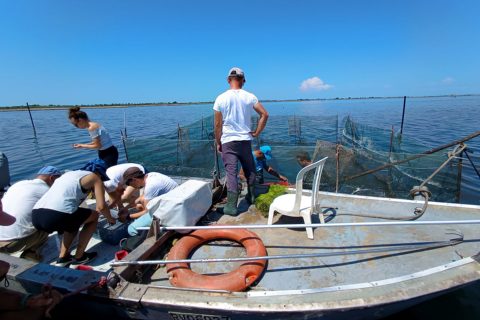
Clams more resistant to heat and Perkinsus: research paves the way for selective breeding
Padua, Italy, 16/10/2026 | University of Padua researchers explain to misPeces the findings presented at Aquaculture Europe 2026 and the steps needed to transfer them to hatcheries. Initial applications could emerge within the next two or three years, although the relationship between resistance, growth and other production traits still need to be assessed