
Global availability of fishmeal and fish oil is once again becoming one of the main sources of tension for the aquaculture industry. The progress of Peru’s first anchovy fishing season and production restrictions in China are shaping international marine ingredient supply at a time when aquaculture continues to depend on these raw materials to maintain production performance, nutritional stability and feed efficiency.
According to the latest market report published by IFFO, the Peruvian season is progressing slowly due to the high presence of juveniles and preventive management measures linked to ongoing coastal El Niño conditions.
On 27 May, the Peruvian authorities extended the fishing ban in the country’s north-central zone until 10 June, affecting the main anchovy fishing area for global fishmeal and fish oil production.
Peru accounts for around 20% of global production of these ingredients in a normal year, meaning that any disruption to the season has an immediate impact on perceptions of market availability and purchasing strategies among aquafeed manufacturers.
The situation also follows a particularly weak start to the year for fishmeal production. IFFO reported that cumulative fishmeal production during the first quarter of 2026 fell by 28% compared with the same period in 2025, while March alone recorded a year-on-year decline of 38%.
Fish oil proved more resilient, although cumulative production still declined by 12% during the first quarter.
Pressure is not coming from Peru alone. In Chile, cumulative catches and fishmeal production remain significantly below last year’s levels despite stable availability of salmon processing by-products.
In the United States, the Gulf menhaden season has started with better prospects than in 2025, while the Atlantic season is expected to begin in June. In northern Europe, blue whiting fishing activity is slowing sharply as the main fishing season in Iceland and Norway approaches its end, while Denmark continues to report weak catches of sandeel and sprat.
China keeps domestic production constrained
The other major focus of market attention is currently China, one of the world’s largest consumers of marine ingredients for animal feed and aquaculture.
Since the fishing moratorium came into force on 1 May, Chinese domestic production of fishmeal and fish oil has depended mainly on frozen fish stocks accumulated before the ban and on by-products generated by industrial processing activities.
IFFO noted that, despite these restrictions, cumulative Chinese fishmeal and fish oil production during the first four months of 2026 exceeded the levels recorded during the same period last year, supported by tight import requirements and pressure on alternative raw materials used in feed formulation.
At the same time, soybean meal prices have recently shown a downward trend due to oversupply and weaker feed sector demand, while maize prices have remained relatively stable.
According to Chinese customs data cited by IFFO, soybean imports reached 25.15 million tonnes between January and April 2026, up 8.5% compared with the same period of the previous year.
A critical factor for aquaculture competitiveness

For the aquaculture industry, developments in Peru and China once again demonstrate that marine ingredients remain a critical variable for production competitiveness.
Although aquafeed formulation continues to move towards greater incorporation of plant proteins, by-products, functional ingredients and emerging alternative raw materials, fishmeal and fish oil still play a central role in terms of digestibility, palatability, physiological stability and production performance.
The current scenario is forcing aquafeed manufacturers and producers to manage supply risk and cost volatility with greater precision, particularly in intensive species such as salmonids, gilthead seabream, European seabass and shrimp.

Related

Latest In-depth
-
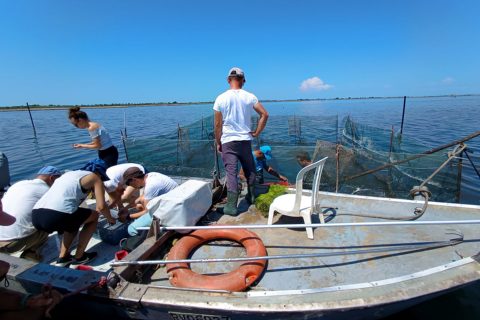
Clams more resistant to heat and Perkinsus: research paves the way for selective breeding
Padua, Italy, 16/10/2026 | University of Padua researchers explain to misPeces the findings presented at Aquaculture Europe 2026 and the steps needed to transfer them to hatcheries. Initial applications could emerge within the next two or three years, although the relationship between resistance, growth and other production traits still need to be assessed