European aquaculture operates under some of the world’s most demanding environmental, health and animal welfare standards. This represents a reputational strength and a competitive advantage compared with markets where production may be subject to less stringent controls.
However, it can also become a weakness when sustainability is applied primarily as a limitation rather than as a tool to improve production.
The problem is not the pursuit of sustainability itself. The problem arises when these requirements are not accompanied by effective planning, administrative simplification, incentives, applied innovation and proportionate technical criteria.
When every new requirement results in additional regulatory burdens, higher costs or greater uncertainty, sustainability ceases to be a driver of improvement and begins to act as a barrier to competitiveness.
This can be seen, for example, when environmental protection leads to increasing spatial restrictions without the designation of new areas suitable for aquaculture; when animal welfare requirements expand without clear and harmonised indicators for each species; or when new reporting, traceability and monitoring obligations are introduced without properly assessing their economic impact on businesses.
One of the clearest examples is maritime spatial planning
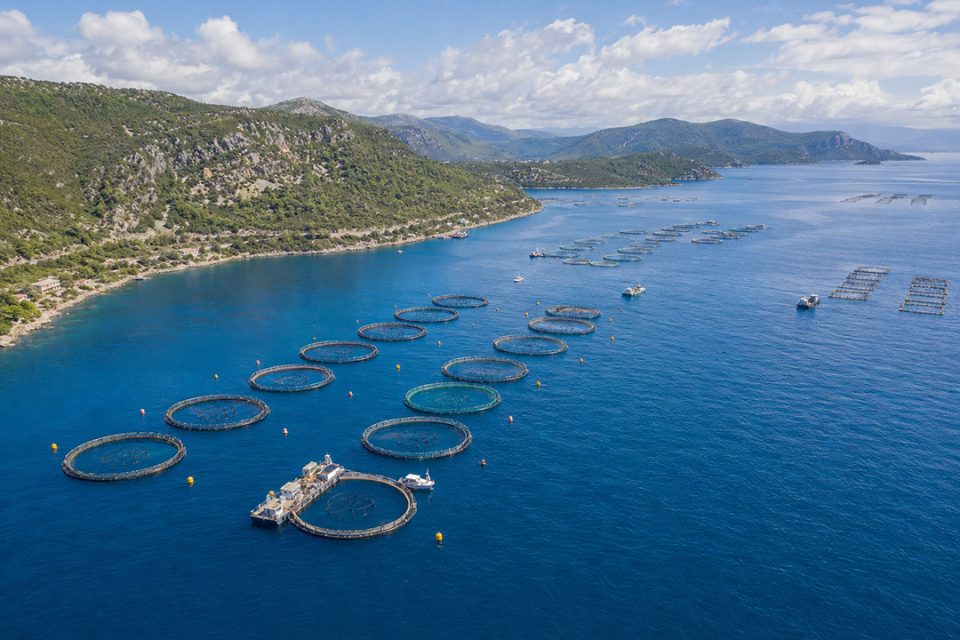
While competing countries have identified and developed specific areas for aquaculture growth, the establishment of new production zones in many European regions progresses slowly or faces significant obstacles.
Sustainability is often interpreted as limiting activities, when it should also involve facilitating the production of food with a low environmental footprint in suitable locations.
Another relevant example is environmental permitting
Properly assessing the potential impacts of an aquaculture facility is essential. However, when permitting procedures take years to complete or require the sequential involvement of numerous authorities, environmental assessment ceases to be solely a protection tool and also becomes a barrier to investment.
As a result, projects that are technically sound and environmentally compatible often face considerable difficulties in being developed within the European Union.
The same applies to new animal welfare requirements
The sector shares the objective of improving farming conditions. However, significant scientific gaps still exist regarding species-specific welfare indicators for many farmed aquatic animals.
In some cases, new obligations are proposed before harmonised methodologies or practical monitoring tools are available. This creates uncertainty for businesses and makes it more difficult to implement measures that genuinely improve fish welfare.
The paradox is that regulations designed to raise European standards may ultimately shift production to third countries operating under less demanding environmental, health or social requirements.
In such scenario, Europe would produce less, become more more dependent on import and not necessarily achieve a better overall environmental outcome.
Sustainability will only be truly sustainable if it is also economically viable for businesses. If European aquaculture is to grow responsibly, adding restrictions alone will not be enough. What is needed is a framework that enables investment, innovation, production and competitiveness under clear, proportionate and practical rules.

Related
Latest In-depth
-
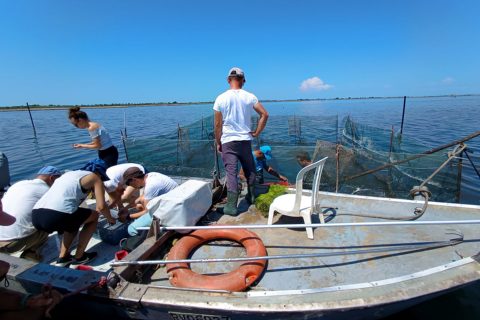
Clams more resistant to heat and Perkinsus: research paves the way for selective breeding
Padua, Italy, 16/10/2026 | University of Padua researchers explain to misPeces the findings presented at Aquaculture Europe 2026 and the steps needed to transfer them to hatcheries. Initial applications could emerge within the next two or three years, although the relationship between resistance, growth and other production traits still need to be assessed