
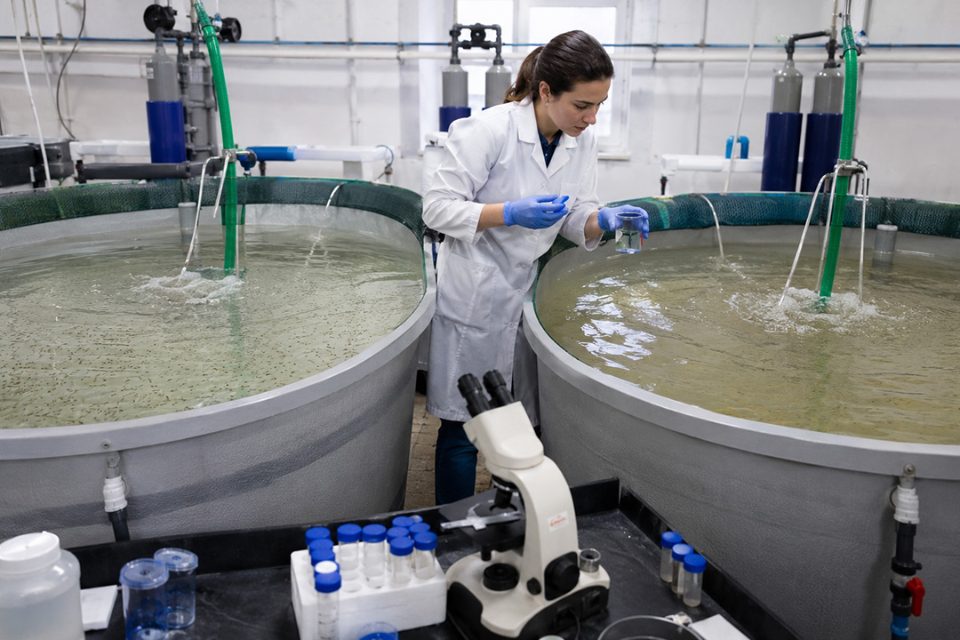
Two tanks receive larvae from the same batch, use the same diet and follow and identical management protocol. Even so, one maintains an acceptable survival rate while the other records high mortality or more irregular growth. This lack of reproducibility, which is common during the early stages of production, cannot always be attributed to egg quality, nutrition or an obvious operational failure.
Part of the scientific community believes that the explanation may lie in the relationship between the larvae and the microbial communities present in the water and throughout the production system. Larval losses have traditionally been interpreted mainly as the result of nutritional deficiencies, poor broodstock quality or infections caused by identifiable pathogens.
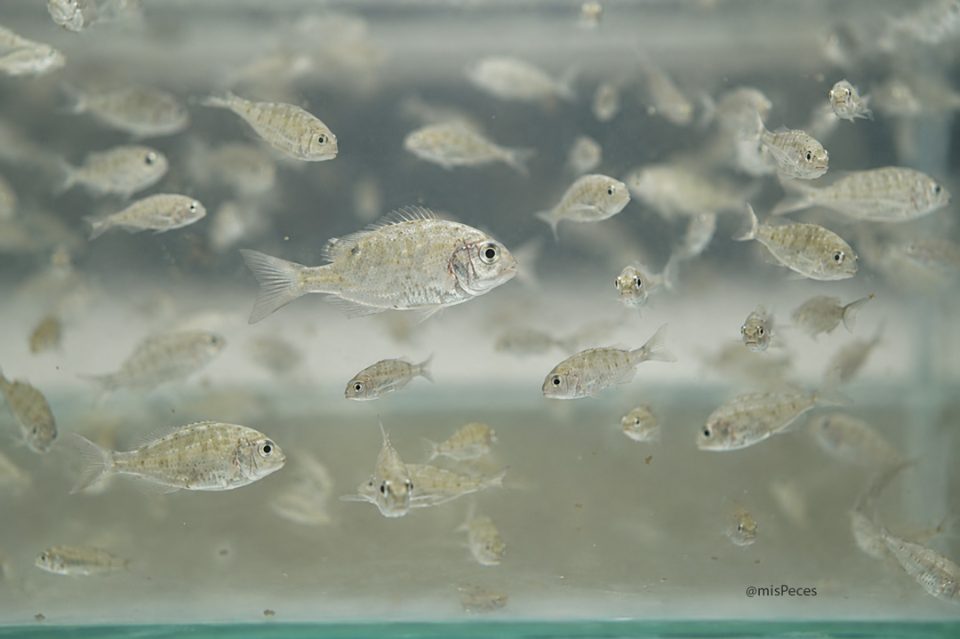
However, these factors do not fully explain why substantial differences can emerge between replicate tanks operating under the same apparent conditions. Researchers suggest that, in many cases, the problem may be dysbiosis: an imbalance in the microbiota that alters its functions and encourages harmful interactions, even when no specific disease-causing bacterium can be identified.
This perspective turns the microbiota into a production variable that must be managed throughout the larval cycle. Its composition is not fixed and can change significantly within only a few days, as a result of both environmental selection and random colonisation processes. Disinfecting the water at the beginning of the cycle or applying a probiotic on a single occasion therefore does not guarantee that the microbial community will remain stable until metamorphosis.
Rearing water plays a fundamental role because it acts as a continuous source of microorganisms for the larvae. The fish microbiota does not, however, simply reproduce the community found in the tank: some microorganisms successfully colonise the larvae, while others are excluded.
The relative abundance of each microbial group in the water, the availability of organic matter and the conditions within the system all influence this process. This helps explain why relatively small environmental differences can eventually produce very different biological outcomes.
Scientific evidence also challenges the assumption that more disinfection necessarily leads to better production. Ultraviolet radiation, ozone and other treatments are important to establishing hygienic barriers, but they can also leave behind a system with low microbial density and sufficient nutrients for rapid recolonisation. When fast-growing opportunistic bacteria are the first to occupy that space, disinfection may shift the problem rather than solve it.
The decisive issue is not only how many microorganisms are removed, but which microbial community develops afterwards.
Probiotics are another tool attracting considerable interest, although their effects remain difficult to reproduce consistently. Some trials report improvements in survival, growth or stress tolerance, while others fail to find stable benefits.
One major limitation is that many of the strains administered do not colonise the larvae for long or disappear only a few days after application. Their effectiveness may depend on the species, the age of the animals, the existing microbiota, the production technology and the timing of administration.
The scientific position is therefore that effective microbial management will require a combination of measures, including disinfection, organic-matter removal, recolonisation control, biofiltration, water stabilisation and the selection of beneficial microorganisms.
Recirculating aquaculture systems and microbiologically mature water have produced promising results, but experimental evidence still needs to be converted into measurable industrial protocols. For hatcheries, the goal is not to eliminate all microorganisms, but to maintain stable communities that reduce risk of dysbiosis and make juvenile production more predictable.

Related

Latest In-depth
-
Clams more resistant to heat and Perkinsus: research paves the way for selective breeding
Padua, Italy, 16/10/2026 | University of Padua researchers explain to misPeces the findings presented at Aquaculture Europe 2026 and the steps needed to transfer them to hatcheries. Initial applications could emerge within the next two or three years, although the relationship between resistance, growth and other production traits still need to be assessed