
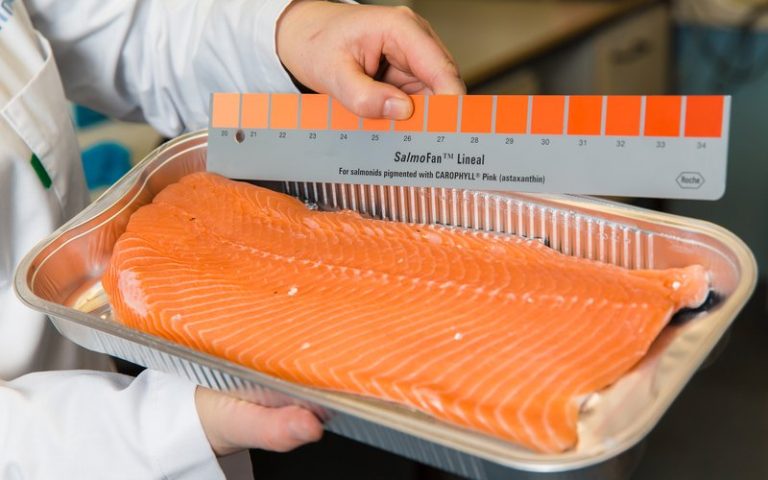
A recent study by Nofima has found that the color intensity of Norwegian salmon has been decreasing from 2012 to 2021, followed by a slight increase afterward. Despite this partial recovery in recent years, the study notes that the pigment levels range between 4 and 8 milligrams per kilogram, which is concerning for producers and potentially below market expectations.
One of the study's key findings is that various producers have reported difficulties in achieving the desired fillet color, which varies between 22 and 27 on the SalmoFan scale—a standard reference used in the industry—and 5 to 7 milligrams per kilogram of astaxanthin, an essential pigment for the characteristic coloration of this fish.
According to the report, some producers have observed color issues in 40% of slaughtered fish, while others report problems in less than 2% of production. This discrepancy among producers may be due to a combination of factors affecting how pigments are deposited in the salmon.
On one hand, the astaxanthin content in the feed is a contributing factor. Another cause is the rapid growth of the fish and their ability to retain color. Rapid growth periods seem to interfere with the effective deposition of astaxanthin in the salmon's muscle.
Mechanical and thermal treatments against sea lice, which are becoming more frequent due to the increased incidence of parasites, generate significant stress in the fish, which has been shown to negatively impact fillet pigmentation.
The time of year when the fish are slaughtered also influences color, with autumn showing the best pigmentation levels. Additionally, factors such as water temperature and light exposure can affect how efficiently salmon absorb and utilize astaxanthin.
The source of the fry also plays an important role in fillet color quality. The study found significant variation in fish pigmentation depending on the fry producer, suggesting that early rearing conditions could influence the fish's ability to deposit pigment.
To improve fillet coloration, producers are adopting a strategy that combines increasing astaxanthin content in the feed to 50 to 70 milligrams per kilogram, along with omega-3 EPA and DHA content and vitamins.
Why is good fillet pigmentation important?

The color of salmon is one of the most important factors for consumers when evaluating product quality. Generally, consumers associate a deep pink or orange color with freshness, health, and high nutritional value. This characteristic color is perceived as an indicator of high quality and naturalness, which directly influences purchasing decisions.
Salmon fillets with paler or uneven pigmentation may be perceived negatively, as consumers might associate them with a less fresh or lower quality product. This perception can lead to a preference for fillets with a more uniform and intense color, which are seen as more appetizing and healthier.
Moreover, in markets where premium quality is important, such as in the case of Norwegian salmon, poor fillet color can affect the product's reputation and, consequently, its market value.

Related

Latest In-depth
-

Clams more resistant to heat and Perkinsus: research paves the way for selective breeding
Padua, Italy, 16/10/2026 | University of Padua researchers explain to misPeces the findings presented at Aquaculture Europe 2026 and the steps needed to transfer them to hatcheries. Initial applications could emerge within the next two or three years, although the relationship between resistance, growth and other production traits still need to be assessed