
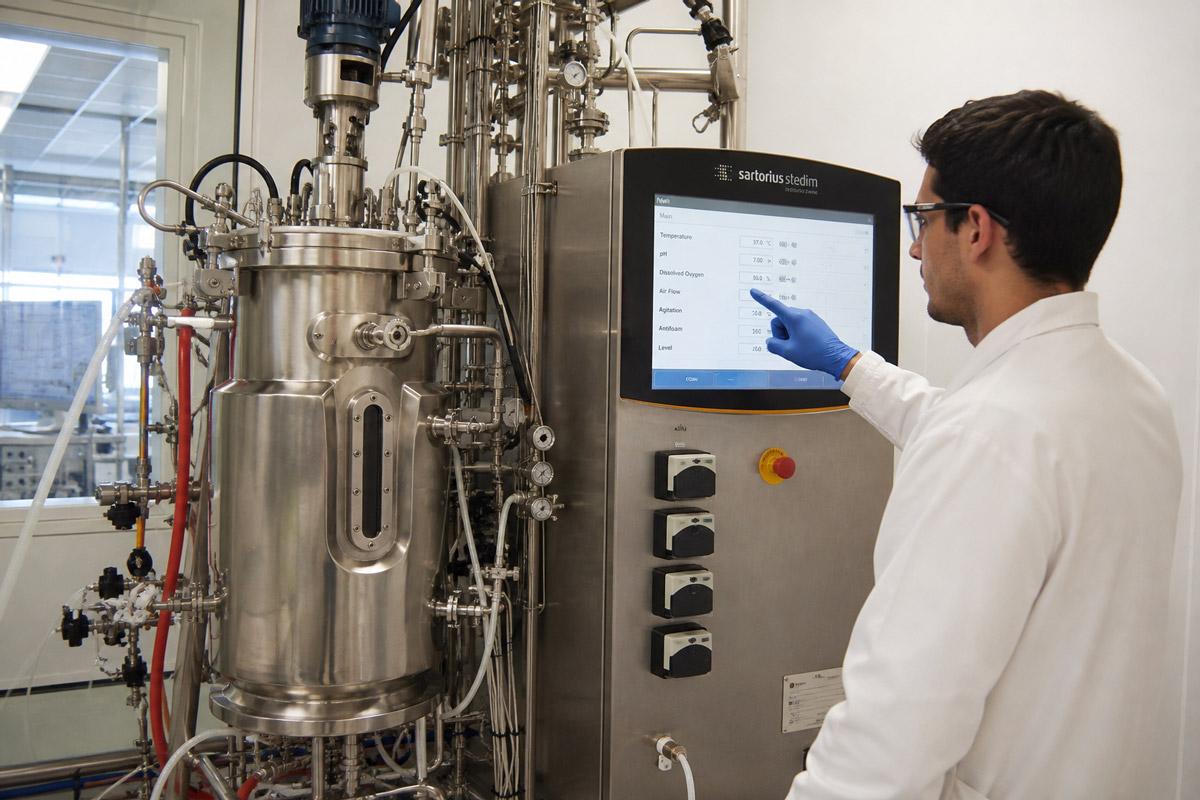
Two microbial products may contain bacteria belonging to the same species and be intended for similar applications, yet produce different results under commercial aquaculture conditions.
The explanation may lie in the particular strain selected, but also in how it has been fermented, processed, stabilised, stored, and ultimately applied.
Industrial scale-up is the critical bridge between research and farm use. Fermentation temperature, oxygen availability, pH, nutrients and culture duration must be adapted to the requirements of each strain. Condition that work in laboratory vessels may behave differently in industrial fermenters, where mixing, heat transfer and oxygen distribution become more difficult to control.
Bacteria belonging to the genus Bacillus are widely used in aquaculture, particularly in shrimp farming. Depending on the strain, they may help break down organic matter, influence microbial communities in water and sediment, support nitrogen management or improve nutrient utilisation when administered through feed.
These effects, however, are strain-specific and cannot be attributed equally to every Bacillus product.
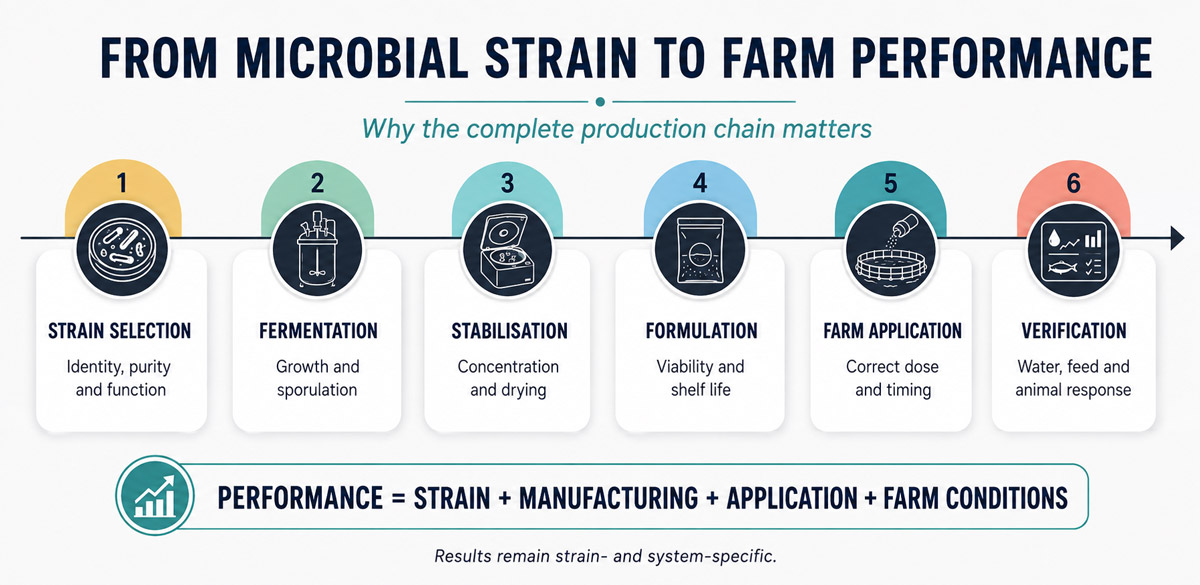
Producing a stable microbial solution also requires controlling what happens after fermentation. Centrifugation, washing, concentration and drying can all affect cell integrity and viability. Protective compounds, particle size, blending and packaging must therefore be selected carefully to ensure that the microorganisms remain stable during storage and can recover their activity after application.
Microbial counts alone do not provide a complete measure of quality. Strain identity, purity, sporulation rate, metabolic activity, shelf-life stability and batch-to-batch consistency are also relevant.
Farmers should consider whether viability is guaranteed until the end of the stated shelf life and whether the product has been evaluated under conditions comparable to their own production system.
Even a consistently manufactured product will not produce identical results on every farm. Temperature, salinity, oxygen, pH, organic load, stocking density, feeding practices, disinfectant use and the existing microbiota can influence its performance.
Closing the gap between microbial innovation and commercial aquaculture therefore requires the complete chain to work: appropriate strain selection, reliable industrial production, stable formulation, correct application and verification under real farming conditions.

Related

Latest In-depth
-
Clams more resistant to heat and Perkinsus: research paves the way for selective breeding
Padua, Italy, 16/10/2026 | University of Padua researchers explain to misPeces the findings presented at Aquaculture Europe 2026 and the steps needed to transfer them to hatcheries. Initial applications could emerge within the next two or three years, although the relationship between resistance, growth and other production traits still need to be assessed