
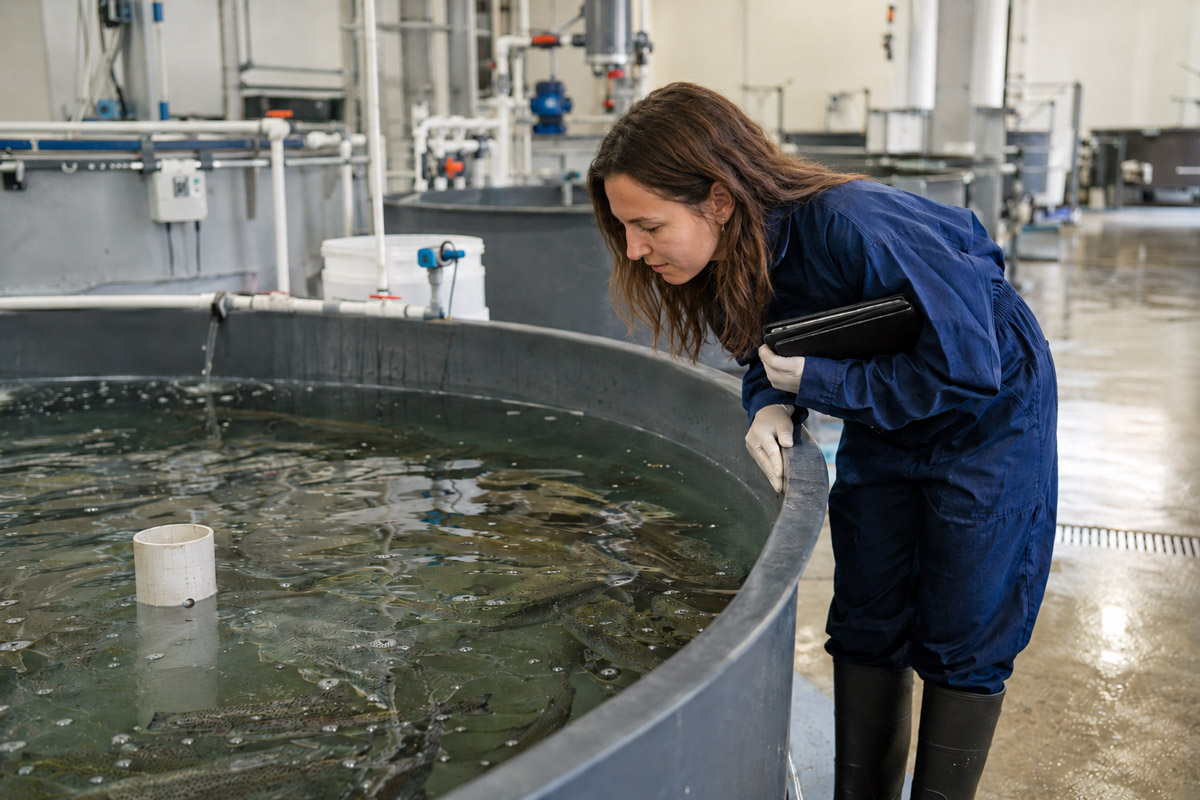
Plant extracts incorporated into aquafeeds can modify immune responses and resistance to certain bacterial infections in rainbow trout. Their effects cannot, however, be generalised across diseases: efficacy depends on the plant, the concentration administered and the pathogen encountered, according to a study published in Aquatic Sciences and Engineering.
Researchers evaluated aqueous methanolic extracts of fenugreek seeds, bay leaves and black mustard seeds, incorporated into diets at concentrations of 0.1, 1 and 5 grams per kilogram. The 45-day trial used juvenile rainbow trout weighing approximately 5.6 grams and assessed growth, feed conversion, several immune indicators and survival following bacterial challenges.
None of the nine treatments produced statistically significant differences in final weight, weight gain, specific growth rate or feed conversion ratio. The extracts did alter certain components of the immune response, including respiratory burst activity, myeloperoxidase activity and the expression of immune-related genes, although the effects varied according to dose and sampling time.
These differences translated unevenly into survival after infection. Fenugreek at 5 grams per kilogram achieved the highest survival against Yersinia ruckeri, while fenugreek at 1 gram and black mustard at 5 grams per kilogram performed particularly well against Vibrio anguillarum. Some treatments that performed favourably against one bacterium were nevertheless neutral or less effective against another.
Bay leaf extract illustrated this variability particularly clearly. Its lowest concentration, 0.1 grams per kilogram, produced the poorest survival outcomes against Aeromonas salmonicida and Vibrio anguillarum. The result shows that a natural origin does not in itself guarantee efficacy or safety, nor does increasing or reducing the dose necessarily produce a predictable response.
Fenugreek emerged as the most promising of the three extracts, particularly at concentrations of 1 and 5 grams per kilogram, but the study does not yet demonstrate effectiveness under commercial farming conditions. Before such additives can be incorporated into health strategies, their composition, dosage, administration period, cost and pathogen-specific effects will need to be validated in production-scale trials.

Related

Latest In-depth
-
Clams more resistant to heat and Perkinsus: research paves the way for selective breeding
Padua, Italy, 16/10/2026 | University of Padua researchers explain to misPeces the findings presented at Aquaculture Europe 2026 and the steps needed to transfer them to hatcheries. Initial applications could emerge within the next two or three years, although the relationship between resistance, growth and other production traits still need to be assessed