


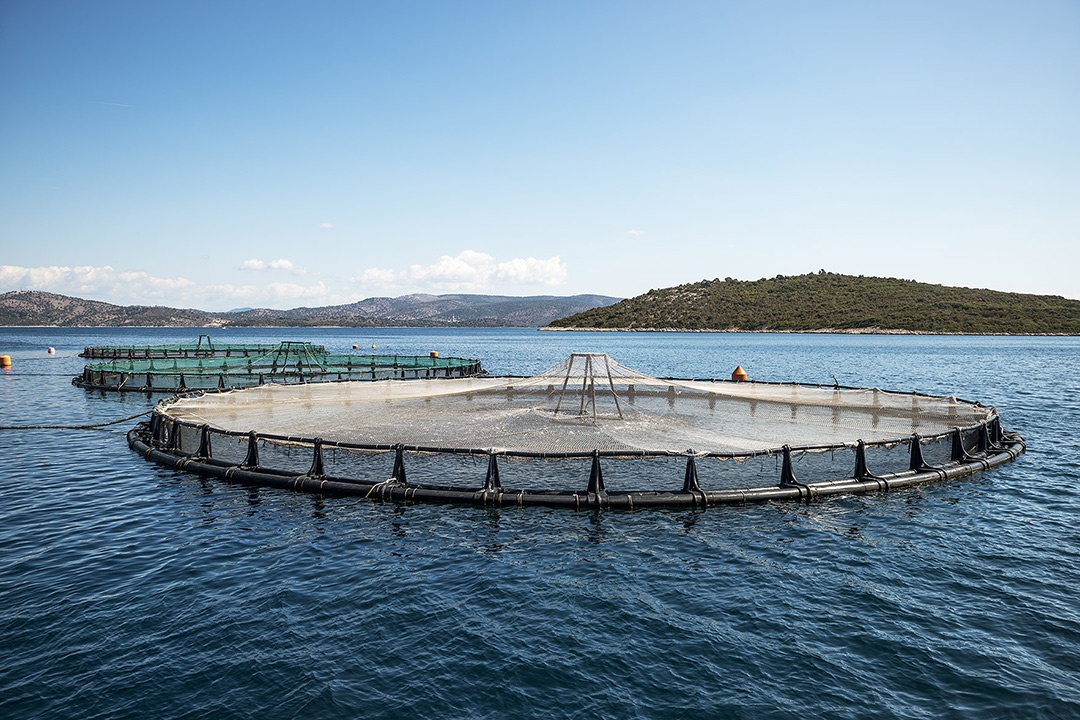
The Aquaculture Stewardship Council (ASC) has postponed the mandatory transition of certified farms to its new Farm Standard until 1 May 2028. The previous deadline was 1 May 2027, giving producers, auditors and companies undergoing certification an additional year to adapt their procedures, documentation and control systems.
The revised timetable follows feedback from mock audits, pilot assessments and the first farms certified under the new framework.
According to ASC, practical experience has identified requirements whose wording, interpretation or implementation could be made clearer and more consistent. In some cases, the information requested by the standard may already be collected through existing systems, processes or assurance mechanisms.
While preparing the next full revision, ASC has released Farm Standard V1.0.1A, an interim version effective from 1 July 2026 until 1 February 2027. It is intended to act as a bridge to V1.1 and temporarily suspends auditing against a small number of requirements that remain under review.
However, the announcement does not specify which requirements have been paused or explain the precise difficulties encountered during their implementation.
ASC expects to publish Farm Standard V1.1 on 1 November 2026, subject to its governance and approval processes. In the meantime, the organisation says it will continue investing in guidance, implementation tools, training and engagement with farmers and auditors.
Farms that are ready may still transition voluntarily before the revised mandatory deadline.
The postponement illustrates the complexity of replacing multiple species-specific standards with a single global framework covering very different production systems, environmental conditions and business models.
For farms, the additional year reduces immediate implementation pressure, but it also extends a transitional period in which different versions of the standard will coexist and further technical changes will need to be closely monitored.

Latest news
-
Cormorants leave European freshwater aquaculture bearing losses and protection costs with little compensation
Roma, Italy, 25 August 2026 | An inventory by FAO, EIFAAC, EAA and FEAP puts annual losses reported by fish farms at more than EUR 138 million and extrapolates the European total to around EUR 250 million
-
Test strip brings furunculosis diagnosis closer to trout farms
China, 25 August 2026 | The method identifies Aeromonas salmonicida in around one hour without a thermal cycler, but DNA extraction and limited clinical validation still prevent routine field use
-
Higher dietary EPA and DHA levels linked to lower mortality and improved feed conversion in salmon
Norway, 26 August 2026 | An analysis of more than 430 million fish associates levels above 9% of total fatty acids with better and more predictable production outcomes, although the observational study cannot demonstrate causality