
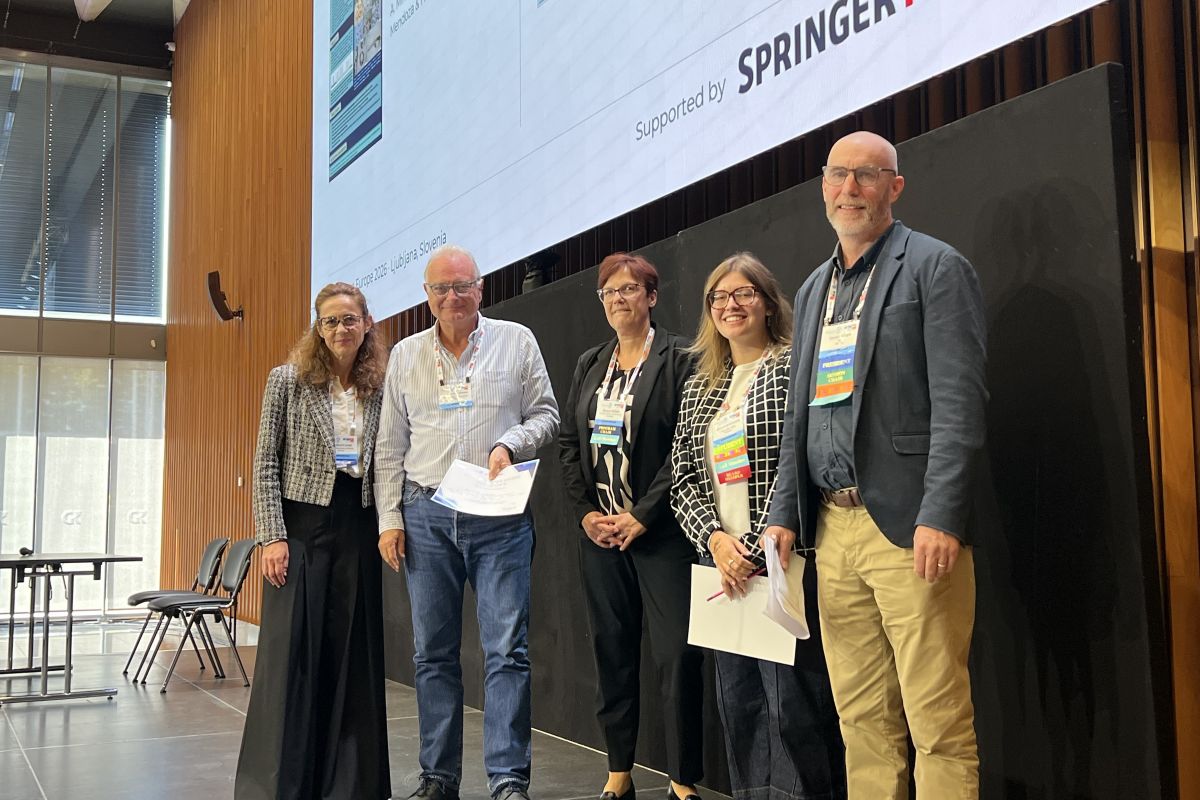
Atlantic bluefin tuna (Thunnus thynnus) maintained in land-based facilities can spawn throughout the 24-hour cycle, departing from the strongly synchronised night-time spawning pattern previously described for the species in the wild. This is the main finding of an IEO-CSIC study awarded Best ePoster at Aquaculture Europe 2026, held this week in Ljubljana.
The study, presented by Amanda Miras and colleagues, examined the reproduction of 16 Atlantic bluefin tuna weighing around 250 kg, which had been maintained for nine years in a 22-metre-diameter, 10-metre-deep circular tank at the ICTS-ICAR facility in Cartagena, Spain. The broodstock received GnRHa implants to induce final maturation and spawning.
Between 6 and 16 July 2026, researchers collected more than 10 million fertilised eggs from 20 spawning events. To determine when spawning had occurred, they assessed the embryonic development stage of the eggs and used water temperature to retrospectively estimate the timing of each spawning event.
The results showed that spawning events occurred at different times throughout the 24-hour period. This contrasts with the pattern reported for Atlantic bluefin tuna in the wild, where spawning is highly synchronised and occurs predominantly during the early hours of the morning. Samples also frequently contained eggs at two or more clearly differentiated embryonic stages, indicating separate spawning events.
The findings raise new questions about how controlled land-based conditions may affect reproductive synchronisation in Atlantic bluefin tuna. Potential factors to investigate include differences between individual broodfish and the influence of environmental conditions and reproductive management. The researchers propose using genetic analysis to identify the females responsible for individual spawning events and determine whether broodfish display individual preferences for particular spawning times.
A better understanding of when spawning occurs and which broodfish are producing the eggs could help improve reproductive control of a species whose full domestication remains a major aquaculture challenge. ICTS-ICAR has been obtaining fertilised eggs annually from land-based Atlantic bluefin tuna broodstock since 2023, contributing to efforts to establish a more controlled and predictable egg supply and advance towards full-cycle bluefin tuna production.
Latest news
-

Atlantic bluefin tuna break their natural spawning schedule in land-based facilities
Ljubljana, 2 October 2026 | An IEO-CSIC study, awarded Best ePoster at Aquaculture Europe 2026, recorded more than 10 million fertilised eggs and 20 spawning events from broodstock maintained in a land-based facility
-
Stolt Sea Farm increases sales by 16.5% and improves production margins
London, 01 October 2026 | Revenue reaches $117.6 million through August, while gross profit before the biological asset fair value adjustment rises by around 25%; the company has $48 million committed to further investment
-

Peanut skin emerges as a natural antioxidant source with potential for aquafeeds
Ljubljana, 2 October 2026 | Lúcia Vieira’s work, awarded Best Student Poster at Aquaculture Europe 2026, combines green extraction, activity against aquaculture pathogens and the valorisation of an agri-food by-product