
The European Union and the United Kingdom have concluded negotiations on a sanitary and phytosanitary (SPS) agreement that will remove many of the trade barriers introduced following Brexit for agri-food, fisheries and aquaculture products.
The agreement is expected to apply from 1 March 2028, subject to the completion of the necessary legal procedures.
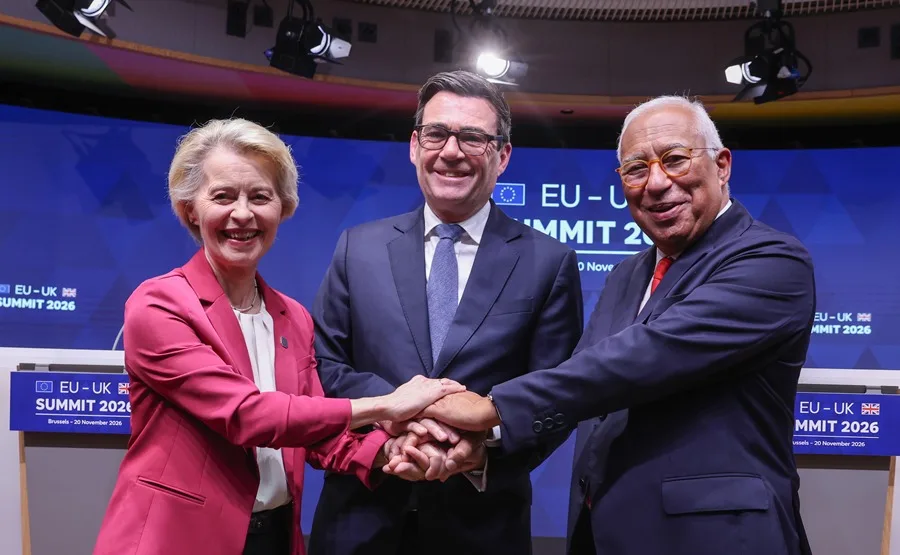
Announced at the bilateral summit held in Brussels on 20 November, the agreement provides for the alignment of British regulations with EU legislation on food safety, animal and plant health, and animal feed.
For aquaculture producers, seafood processors and distributors on both sides of the Channel, the new framework is expected to reduce administrative costs, improve logistics and shorten delivery times, particularly for fresh and perishable products.
According to guidance published by the UK Government, eligible fish and shellfish products will no longer require export health certificates or many of the routine sanitary border checks currently in place.
The changes could strengthen trading opportunities for European aquaculture producers supplying the British market, including Mediterranean seabass and seabream farmers, flatfish producers and shellfish growers.
British seafood exporters, particularly Scottish salmon producers, are also expected to benefit from improved access to the EU market.
Live bivalve mollusc trade set to resume
One of the most significant developments for the shellfish industry will be the resumption of trade in live bivalve molluscs from British Class B production areas destined for purification in EU establishments.
The measure could reopen commercial opportunities for British shellfish growers while providing European purification and distribution businesses with additional sourcing options.
It could also reshape competition within certain segments of the European shellfish market.
Scottish salmon producers have welcomed the agreement. Salmon Scotland believes the new arrangements will reduce costs, border checks and the time needed to deliver fresh salmon to European customers.
The organisation estimates that post-Brexit trade barriers have contributed to an annual export opportunity gap of around £130 million in the EU market. This figure represents estimated potential sales rather than direct administrative costs.
Customs and certain animal health requirements will remain
The agreement will not, however, restore all pre-Brexit trading conditions. Customs declarations and catch certificates required under rules to combat illegal, unreported and unregulated fishing will remain necessary where applicable.
Certain movements of live aquatic animals, including those intended for aquaculture production, will also remain subject to specific animal health requirements.
Businesses trading between Great Britain and the European Union must continue to comply with existing sanitary and documentary requirements until the new arrangements take effect.
Latest news
-
EU and UK to remove most sanitary barriers to seafood trade in 2028
Brussels, 25 November 2026 | The agreement will facilitate seafood trade between Great Britain and the European Union, including the resumption of trade in live bivalve molluscs intended for purification
-
AquaFarm 2027 to focus on Mediterranean aquaculture competitiveness, innovation and environmental adaptation
Pordenone, 25 November 2026 | The event will also address developments in seafood markets, origin guarantees, import controls and regulatory simplification
-
European veterinarians highlight fish health shortcomings in Mediterranean aquaculture
Brussels, 25 November 2026 | The Federation of Veterinarians of Europe warns of limited vaccine availability, stagnation in the range of veterinary medicines and a lack of welfare indicators tailored to Mediterranean species