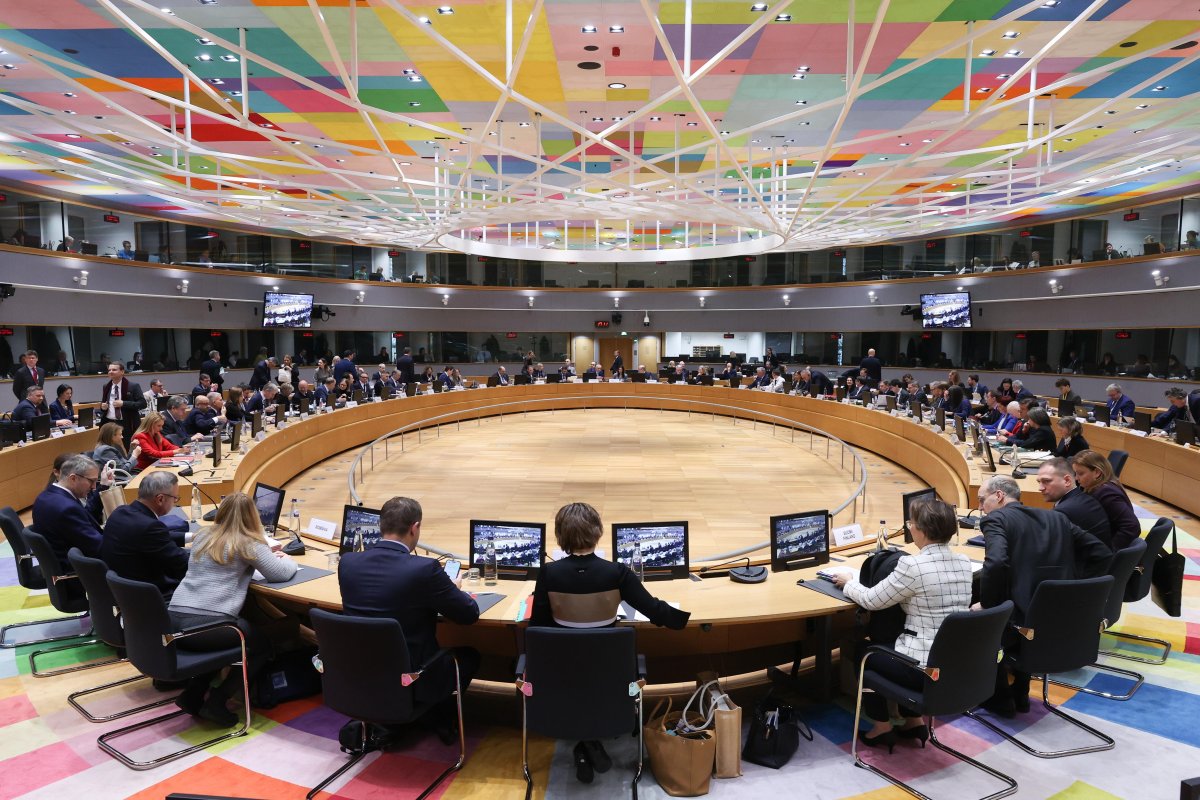
EU member states have agreed their partial negotiating position on the conditions governing EU support for fisheries, aquaculture and maritime policy for 2028-2034, taking a further step towards a funding architecture different from the current European Maritime, Fisheries and Aquaculture Fund (EMFAF).
The agreement gives the Council a mandate for negotiations with the European Parliament, although financial provisions and other horizontal issues remain part of the wider negotiations on the 2028-2034 Multiannual Financial Framework.
Under the model now being negotiated, fisheries and aquaculture support would be delivered mainly through National and Regional Partnership Plans (NRPPs), within a broader architecture bringing together programmes currently managed separately. The Council has backed this approach on the grounds that it should simplify EU funding, provide member states with greater flexibility and improve coordination between policies. Aquaculture has gained greater visibility during the Council's negotiations, but the model does not currently recreate a standalone sectoral fund equivalent to today's EMFAF.
This approach contrasts with the position advocated by the Federation of European Aquaculture Producers (FEAP). Together with other organisations representing the European fisheries and aquaculture value chain, FEAP has called for a reinforced, specific and standalone fund for fisheries and aquaculture under the next Multiannual Financial Framework, with sufficient resources to address the particular needs of the sector. Industry organisations argue that incorporating this support into a much broader funding structure could make it harder to address specific challenges facing aquaculture producers, fishers and processors, including competitiveness, energy transition and generational renewal.
FEAP's concerns extend beyond whether a dedicated fund remains in place. The organisation has also argued for predictable, structural and sector-specific funding, building on the experience of EMFAF, while warning against additional administrative requirements or national gold-plating. More recently, it has highlighted the need to ensure that future environmental funding conditions do not inadvertently exclude equipment that remains operationally necessary on aquaculture farms where viable zero-emission alternatives are not yet available.
The Council agreement is nevertheless partial and does not determine how much funding aquaculture will receive. Budget allocations, ring-fenced amounts and other financial provisions remain part of the broader EU budget negotiations. Nor does the Council's announcement currently identify aquaculture-specific changes comparable with some of the provisions introduced for fisheries investments. For producers and investors, the key issue will therefore be whether the flexibility offered by the new model translates into funding that is effectively accessible to aquaculture businesses — and how much protection that support will receive when competing with other priorities within each member state's partnership plan.
The position agreed on 29 September now becomes the Council's mandate for negotiations with the European Parliament. For European aquaculture, the debate is therefore shifting from the formal survival of EMFAF to a potentially more consequential question: how much funding will be effectively secured for the sector, and how much discretion will national governments have over its allocation. Until negotiations on the MFF and the accompanying legislation are completed, both the final architecture and the resources available to aquaculture from 2028 remain open.
Latest news
-
Feed containing 3% cork doubles solids removal efficiency in salmon RAS
Ljubljana, Slovenia, 30 September 2026 | Sara Sousa Brito’s work, recognised with EAS Spotlight Award, makes faeces float and increases drum filter removal efficiency from 42% to 86.5%; the next step is to test the solution in commercial facilities
-
EU moves towards new aquaculture funding model for 2028-2034 as producers call for ring-fenced support
Brussels, 29/09/2026 | The Council has agreed its negotiating position on a system that would channel support mainly through national and regional plans, while European aquaculture producers have been calling for dedicated, predictable funding for the sector
-
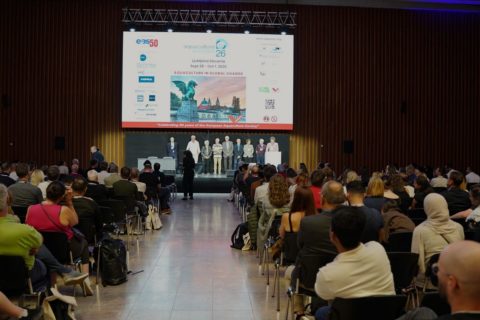
EAS celebrates 50 years of evolution alongside European Aquaculture in Slovenia
Ljubljana, Slovenia, 29 September 2026 | Alistair Lane identifies three milestone in the Society’s history: expanding its scope to encompass all aquaculture, creating its student group and adding an exhibition to the scientific conference