
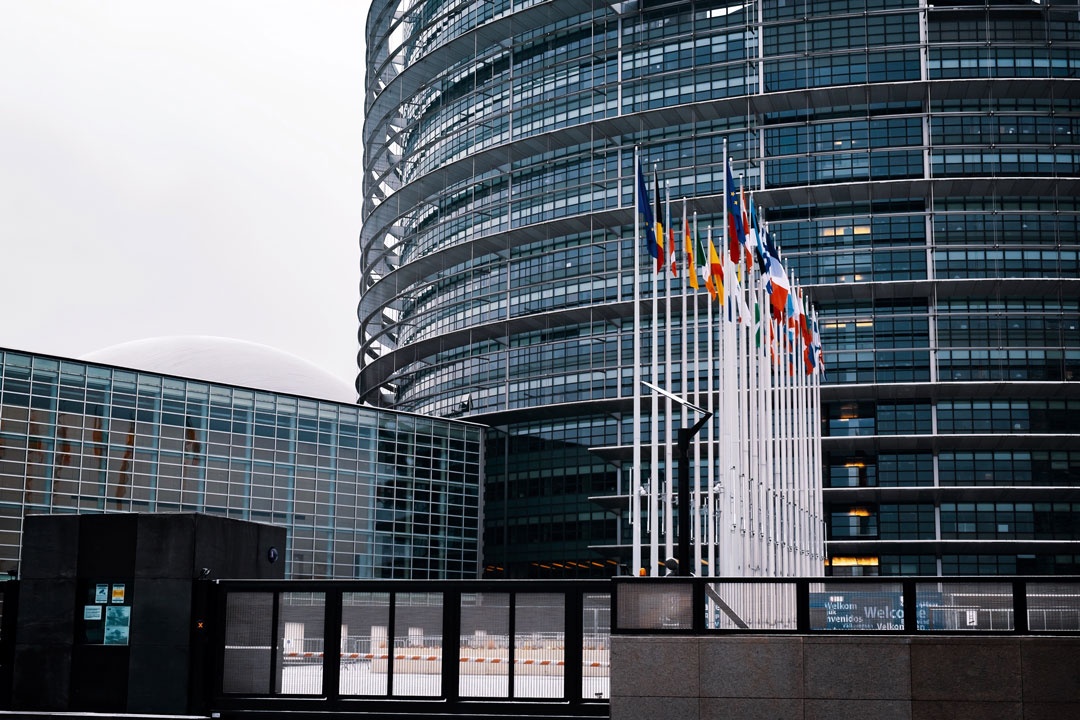
Europe’s fisheries and aquaculture sector is approaching the next budget cycle with renewed expectations of stronger financial backing following the adoption by the European Parliament of its resolution on the Multiannual Financial Framework (MFF) 2028-2034.
The report, adopted on 28 April with 370 votes in favour, 201 against and 84 abstentions, sets out the Parliament’s political priorities for the EU’s next long-term budget. Among them is a call to increase overall EU spending to 1.27% of Gross National Income (GNI), strengthening the Union’s capacity to address major economic and strategic challenges.
In this context, Parliament has made clear its support for a dedicated and ring-fenced allocation for the Common Fisheries Policy, opposing models that would integrate these funds into broader national plans. MEPs reject the “one plan per Member State” approach, warning it could dilute the weight of fisheries and aquaculture and expose the sector to direct competition with other policy areas such as agriculture and infrastructure.
The sector’s main financial instrument, the European Maritime, Fisheries and Aquaculture Fund (EMFAF), is therefore at the centre of the debate. Although the final budget has yet to be defined, members of Parliament’s Fisheries Committee and several political representatives have argued for increasing its allocation to around €7.3 billion, representing an uplift of roughly 20% compared to the current period.
This figure reflects the level of ambition Parliament aims to bring into the budget negotiations. The objective is to secure sufficient resources to support fleet and farm modernisation, the green transition, improved safety standards and generational renewal in a sector that is critical to Europe’s food security.
The debate follows Parliament’s criticism of the initial approach taken by the European Commission, which foresees a greater integration of funds into national frameworks. According to sector estimulates, such a model could significantly reduce the relative weight of fisheries and aquaculture within the EU budget.
A complex three-way negotiation ahead: Commission, Council and Parliament
Despite Parliament’s political backing, the budgetary process remains at an early stage. The Commission is expected to present its formal proposal, after which the Council of the EU will establish its common position.
This future financial framework, set to take effect from 1 January 2028, is shaping up to be a decisive tool enabling companies to address key sector challenges, from decarbonisation to global competitiveness.
However, the adopted text currently represents Parliament’s negotiating mandate, meaning the final budget must still go through a demanding interinstitutional process before becoming reality. Attention now shifts to the Council, where the twenty-seven Member States will need to agree on their position.
Only then will formal trilogue negotiations between the Commission, Council and Parliament begin – at a time when industry stakeholders are already calling on EU ministers to preserve a funding level, they consider essential for the sustainability and future of European aquaculture.

Latest news
-
European Parliament moves to safeguard fisheries and aquaculture funding in next EU budget
Brussels, 30 April 2026 | MEPs push to strengthen EMFAF and prevent dilution of the Common Fisheries Policy within national budgets
-

From intuition to AI-driven feeding: the silent revolution reaching aquaculture farms
Global, 30 April 2026 | Computer vision enables real-time feeding adjustments, reducing waste and improving production efficiency
-
Brussels expands the shield: following the activation of the EMFAF, it authorises State aid to cover up to 70% of fuel surcharges in aquaculture
Brussels, 30 April 2026 | The European Commission takes a further step, allowing Member States to directly offset the energy impact on the sector