

In aquaculture, feed accounts for more than 50% of operating costs and can generate up to 25% waste. For decades, feeding decisions have largely relied on fixed schedules or operator experience. This traditional approach is now being reshaped by artificial intelligence, which allows fish to be fed based on their actual behaviour in real time.
Rather than a simple technological upgrade, this shift represents a broader change in production models. In a context of rising cost pressure and sustainability demands, the ability to feed with greater precision is quickly becoming a key competitive advantage.
At the core of this transformation is computer vision applied to aquaculture environment. Algorithms such as YOLO (You Only Look Once) continuously analyse fish behaviour through cameras installed in tank or cages, identifying when fish are actively feeding and when their interest declines. This enables automatic adjustment of feed delivery, reducing losses, improving feed conversion ratio (FCR), and lowering environmental impact.
A key development is that these systems no longer depend entirely on cloud infrastructure. Lightweight models such as YOLOv8n can now run directly on on-farm devices, processing video in real time with accuracy levels exceeding 90%. This edge computing capability facilitates adoption across both recirculating aquaculture systems (RAS) and marine cages, even in locations with limited connectivity.
Beyond daily operations, artificial intelligence is also accelerating feed development. Automated behavioural analysis makes it possible to detect changes in feeding activity at a much earlier stage, significantly reducing the time required to assess the acceptance of new formulations.
This approach aligns with the increasingly adopted “fail fast” concept in aquaculture innovation: identifying what does not work early in order to optimise resources and accelerate decision-making. In practice, it allows inefficient diets to be discarded within days, avoiding the need to maintain trials for weeks without clear outcomes.
In species such as rainbow trout (Oncorhynchus mykiss), certain inclusion levels of insect meal from Hermetia illucens have been shown to quickly reduce feeding activity, enabling early formulation adjustments. In gilthead seabream (Sparus aurata) and European seabass (Dicentrarchus labrax), these systems have already been used under commercial conditions to optimise feeding strategies, delivering significant reductions in waste and consistent improvements in FCR.
The transition towards data-driven feeding is not only improving efficiency but also redefining how decisions are made on farm. In a sector where every point of feed conversion matters, artificial intelligence is moving beyond promise to become a practical tool with direct impact on profitability.

Latest news
-
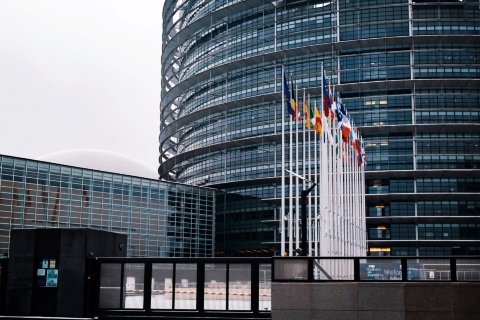
European Parliament moves to safeguard fisheries and aquaculture funding in next EU budget
Brussels, 30 April 2026 | MEPs push to strengthen EMFAF and prevent dilution of the Common Fisheries Policy within national budgets
-

From intuition to AI-driven feeding: the silent revolution reaching aquaculture farms
Global, 30 April 2026 | Computer vision enables real-time feeding adjustments, reducing waste and improving production efficiency
-
Brussels expands the shield: following the activation of the EMFAF, it authorises State aid to cover up to 70% of fuel surcharges in aquaculture
Brussels, 30 April 2026 | The European Commission takes a further step, allowing Member States to directly offset the energy impact on the sector