


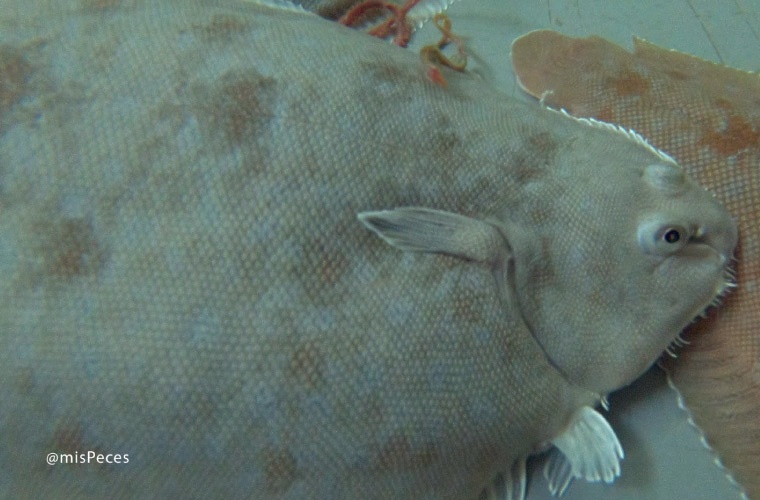
The difficulty experienced by captive-born and captive-reared male Senegalese sole (Solea senegalensis) in reproducing spontaneously may result from a much broader alteration than previously thought.
A new study shows molecular differences throughout the hypothalamic–pituitary–gonadal axis, which coordinates processes ranging from signals originating in the brain to the maturation and release of gametes.
The main advance is that researchers analysed all three levels of the reproductive axis together, comparing captive-born males and females with wild-origin specimens.
In males, they identified 432 differentially expressed genes in the hypothalamus, 657 in the pituitary and 183 in the gonads. The findings therefore place the greatest divergence in the regulatory centres rather than exclusively in the testes.
The results do not reveal a single essential hormone that has simply been switched off, nor do they allow the dysfunction to be attributed to one gene. The differences affect networks involved in neuroendocrine signalling, stress responses, energy balance, steroid metabolism, hormonal feedback and germ-cell development. The observed pattern is therefore consistent with a general disruption involving multiple reproductive processes.
This interpretation builds on previous studies that linked the problem to sperm quality, lower hormone production, the absence of courtship behaviour or differences in the perception of sexual cues. If environmental and social signals are not correctly received, processed and translated into hormonal and gonadal responses, interventions targeting only the testes or administering treatments to adult broodstock may prove insufficient.
The study therefore opens a new line of research with implications for the management of future broodstock. The authors suggest that certain conditions experienced during development may leave persistent programming effects on the reproductive axis. Further research will consequently be needed into the influence of nutrition, stress, stocking density, substrate, and environmental and social stimuli during the early stages of rearing.
The data do not yet identify which aspect of captivity causes these differences or establish a protocol for correcting them. The findings are molecular associations obtained from a limited number of specimens and will require validation through functional studies. Their contribution lies in showing that reproductive failure in captive-born males may not be confined to defective gonadal function, but could instead be the final manifestation of altered regulation across the entire reproductive axis.
Reference
Carballeda, M.; Aramburu, O.; Torres-Sabino, D.; Robles, F.; Navajas-Pérez, R.; Ruiz Rejón, C.; de la Herrán, R.; Bouza, C.; Martínez, P. (2026). Origin-associated transcriptomic signatures across the reproductive axis of Solea senegalensis. Scientific Reports. https://doi.org/10.1038/s41598-026-65703-1

Latest news
-
Aquaculture companies: Troutlodge refines genetic selection, Superior Fresh replicates its model and Atlantic Sapphire enters a new phase
This week’s Aquaculture Business Radar highlights four signals shaping the sector: genetics, aquaponic salmon, circularity and RAS financing. The common thread: aquaculture competitiveness is moving beyond volume towards data, scalability, resource recovery and financial resilience.
-
New data show that captive-born Senegalese sole experience disruption across their entire reproductive axis
Lugo, Spain, 10 August 2026 | The first integrated analysis of the hypothalamus, pituitary and gonads finds the greatest differences from wild-origin fish in the centres responsible for hormonal control of reproduction, shifting attention away from a single cause located in the testes
-
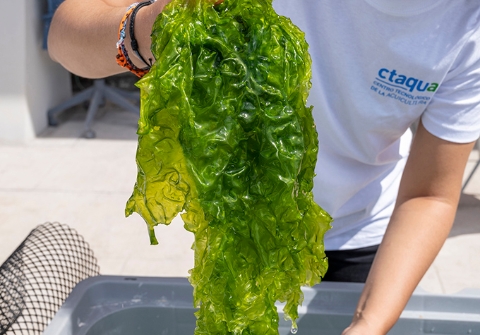
Fermentation improves the protein profile of Ulva as a feed ingredient for European seabass
El Puerto de Santa María, 6 August 2026 | The trial, carried out within the European NOVAFOODIES project, shows that fermented biomass can increase protein concentration and reduce carbohydrates, although high inclusion levels affected growth in juvenile seabass