
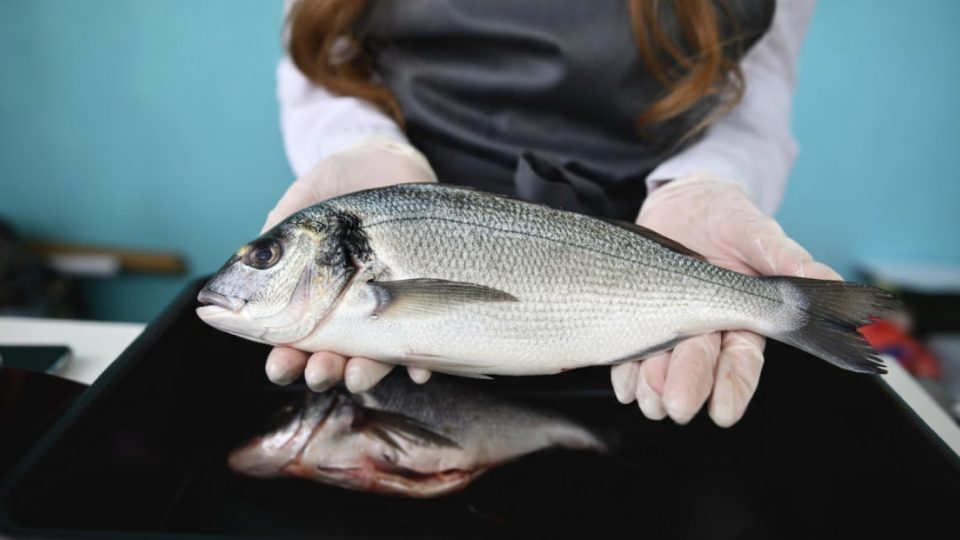
Genetic improvement has been part of modern aquaculture for decades, yet long-term datasets capable of accurately measuring its real production impact remain rare. A new study on gilthead seabream (Sparus aurata) provides some of the strongest evidence to date for a Mediterranean marine species: more than twenty years of selective breeding have increased harvest weight by 76% while maintaining very low levels of inbreeding.
The study, based on Avramar’s breeding programme in Greece and managed in collaboration with Benchmark Genetics, analysed data collected between 2002 and 2023 from nearly 124,000 fish belonging to 1,843 families. The results revealed a cumulative genetic gain of 248 grams in harvest weight, equivalent to an average annual improvement of 3.6% or approximately 15% per generation.
Beyond the magnitude of the improvement, the researchers highlight that the response to selection has remained consistent over more than two decades, a particularly significant achievement in marine species where structured breeding programmes were established much later than those for Atlantic salmon or rainbow trout.
More growth in less time
From a production perspective, the findings have direct implications for farm profitability. The study shows that the increase in harvest weight was not achieved by extending production cycles. On the contrary, harvest weights increased while harvest age gradually declined throughout the study period.
According to the researchers, the accumulated genetic progress could reduce the time required to reach typical commercial sizes by around two months, lowering exposure to biological risks, improving infrastructure utilisation and increasing the turnover of invested capital.
| Indicator | Study result | Production relevance |
|---|---|---|
| Period analysed | 2002–2023 | Provides a long-term assessment of the real impact of selective breeding. |
| Fish analysed | 123,992 fish from 1,843 families | Large and representative dataset from a commercial breeding programme. |
| Cumulative genetic gain | +248 g in harvest weight | More marketable biomass per production cycle. |
| Relative improvement | +76% compared with the base population | Demonstrates that selective breeding can deliver substantial long-term productivity gains. |
| Average annual improvement | 3.6% per year | Consistent and predictable progress for long-term business planning. |
| Improvement per generation | Approximately 15% | Highlights the value of sustained breeding programmes over time. |
| Harvest weight heritability | 0.35 ± 0.02 | Indicates there is still significant scope for future genetic improvement. |
| Accumulated inbreeding in 2023 | 1.3% | Productivity gains were achieved while maintaining genetic diversity. |
| Average increase in inbreeding | 0.39% per generation | Reflects sustainable genetic management of the breeding population. |
| Potential impact on production cycle | Up to around 2 months less to reach market size | Reduced exposure to risks, improved infrastructure utilisation and faster capital turnover. |
At a time when producers are facing rising operating costs and growing pressure to improve efficiency, the results reinforce the role of genetics as one of the highest-return technologies available to Mediterranean aquaculture.
Genetic diversity remains a priority
One of the most notable outcomes of the study is that the observed progress was not accompanied by a significant loss of genetic diversity.
The estimated heritability for harvest weight was 0.35, confirming that substantial genetic variation for growth remains available for future selection. At the same time, the average increase in inbreeding was limited to just 0.39% per generation.
By 2023, accumulated inbreeding within the breeding population stood at around 1.3%, a relatively low figure for a long-term selective breeding programme. The researchers attribute this result to careful mating management, restrictions on family contributions to subsequent generations and the periodic introduction of external genetic material.
Greater efficiency and a lower environmental footprint
The authors emphasise that the benefits of genetic improvement extend beyond economics. Faster growth allows fish to reach market size sooner, improving resource efficiency and increasing overall production performance.
Recent studies also suggest that improved growth can reduce the environmental footprint per kilogram of fish produced, as feed, energy and infrastructure costs are distributed across a larger final output.
For this reason, selective breeding should be viewed not only as a productivity tool but also as a strategic component of sustainable aquaculture development.
The next step: genomic selection
Although the programme evaluated in this study has primarily relied on family-based selection and conventional breeding value estimation, the researchers believe the next major step will be the full integration of genomic technologies.
Genomic selection could significantly increase the accuracy of breeding decisions while accelerating improvement in more complex traits such as disease resistance, survival and product quality.
With more than twenty years of accumulated data and a well-established breeding population, the authors conclude that the programme is ideally positioned to benefit from this transition and further enhance the biological and economic performance of Mediterranean seabream production.
Reference
Thorland, I., Barría, A., Trịnh, T.Q., Nirea, K.G., Antonsen, A., Refstie, T., Kottaras, L., Antonakaki, A., Tzokas, K., Katribouzas, N. and Rye, M. (2026). Sustained genetic gain for harvest weight in gilthead sea bream (Sparus aurata) over more than twenty years of selective breeding. Aquaculture, 625, 744291.

Related



Latest In-depth
-
Clams more resistant to heat and Perkinsus: research paves the way for selective breeding
Padua, Italy, 16/10/2026 | University of Padua researchers explain to misPeces the findings presented at Aquaculture Europe 2026 and the steps needed to transfer them to hatcheries. Initial applications could emerge within the next two or three years, although the relationship between resistance, growth and other production traits still need to be assessed