
Since 19 November, Norway has allowed fish feed manufacturers to use ingredients derived from genetically modified organisms (GMOs) authorised in the European Union without requiring additional approval from the Norwegian Food Safety Authority (Mattilsynet).
The regulatory amendment, adopted on 12 November, applies to processed ingredients intended for fish feed. Living genetically modified organisms remain subject to genetic engineering legislation, while GM ingredients intended for other types of animal feed still require national authorisation.
Until now, EU approval alone was insufficient to market these raw materials in Norway, as EU legislation on genetically modified food and feed has not been incorporated into the European Economic Area Agreement.
The change comes amid the industry's heavy reliance on imported raw materials and growing difficulties in sourcing non-GM plant-based ingredients. More than 90% of the ingredients used in Norwegian aquafeeds are imported, with imports valued at NOK 33 billion in 2024, equivalent to 28% of the country's agricultural imports.
According to Mattilsynet, genetically modified varieties accounted for 75% of global soybean production in 2024.
BioMar, Skretting and other major industry operators supported the reform during the public consultation, although their submissions highlighted different priorities.
Skretting warned that non-GM soybean production in Brazil has shrunk to a niche market of approximately 1.5 million tonnes, representing less than 1% of national production, according to market reports cited by the company.
BioMar highlighted the potential of genetic modification to develop crops requiring less fertiliser, water and pesticides, as well as ingredients with higher levels of marine omega-3 fatty acids. The company also pointed to potential applications in fermentation processes and microalgae production in closed systems.
Other industry operators argued that the reform would provide manufacturers with a regulatory framework enabling them to incorporate these raw materials when market conditions allow.
Potential savings will depend on market uptake
In its impact assessment, Mattilsynet cites potential annual savings of between NOK 1.8 billion and NOK 1.9 billion, based on estimates from earlier Norwegian government documents. However, the authority acknowledges that it is difficult to predict whether manufacturers will incorporate these ingredients and, if so, to what extent.
The authority considers consumer acceptance to be potentially the biggest obstacle to their adoption.
The new regulations broaden sourcing and formulation options for Norway's aquafeed industry, but do not necessarily mean immediate changes to feed formulations or guarantee that any cost savings will be passed on to fish farmers.
The precedent of Aquaterra, an omega-3-rich oil derived from genetically modified rapeseed and authorised in Norway in 2023, as previously reported by misPeces, illustrates that regulatory approval of an ingredient does not necessarily lead to its immediate incorporation into aquafeeds.

Related

Latest In-depth
-
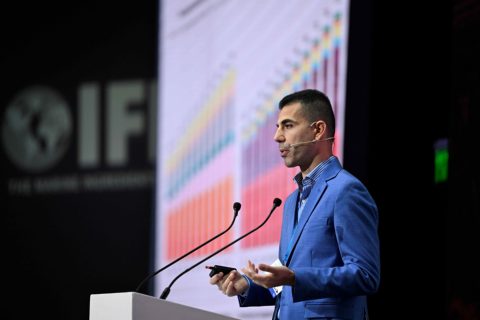
Enrico Bachis: Fishmeal and fish oil production to recover in 2027
Sardinia, 16 November 2026 | global fishmeal production will reach 4.44 million tonnes in 2026, the lowest figure in IFFO’s historical series and fish oil production is expected to be around 1.15 million tonnes, its lowest level since 2016