


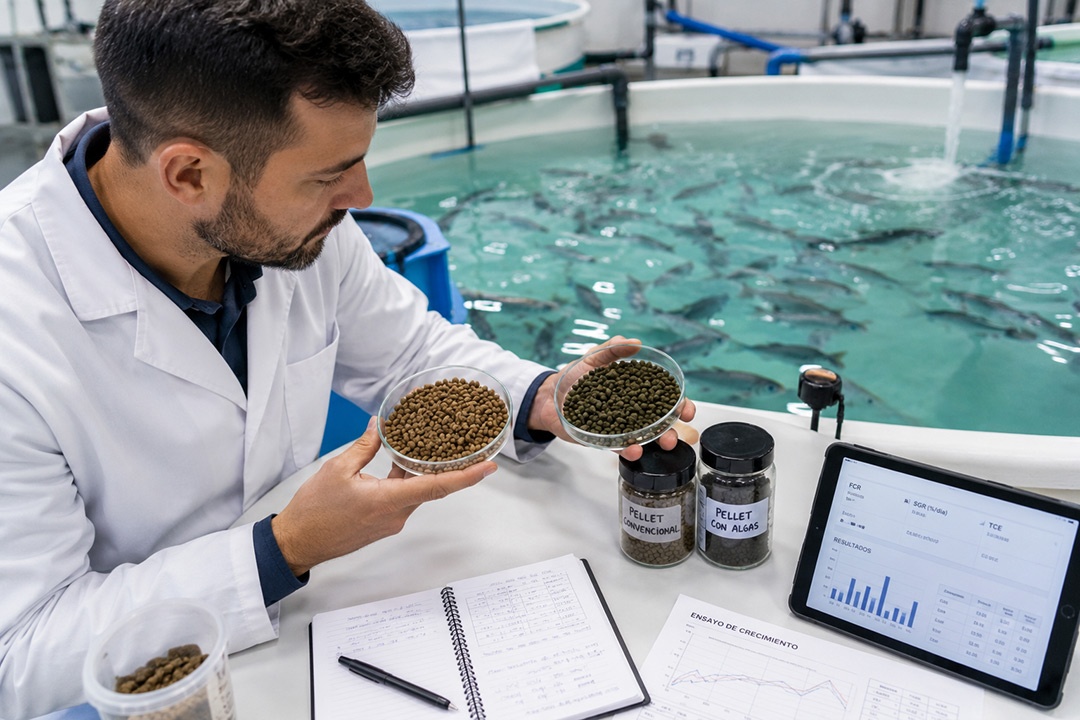
Over the past two decades, macroalgae have been presented as one of the most promising raw materials for improving the sustainability of aquafeeds. They are renewable resources, do not compete for agricultural land of freshwater, and can provide proteins, minerals, polysaccharides and bioactive compounds of interest.
For producers, however, the key question is not how much protein a macroalga contains, but how much growth, feed efficiency and profitability it can generate when incorporated into a commercial diet.
Recent findings in European seabass (Dicentrarchus labrax) juveniles suggest that some macroalgae can improve growth performance and feed efficiency without compromising the digestibility of proteins, lipids or energy.
This shift is significant because it moves the discussion beyond the simple replacement of conventional ingredients towards a more strategic question: the fish’s actual ability to utilise the ingredient.
That is where the main challenge lies. A proportion of the nutritional value of macroalgae may remain inaccessible because of their cell structures, complex polysaccharides, or the may nutrients are embedded within the algal matrix.
As a result, industrial interest will depend not only on producing large volumes of algal biomass, but also on developing processing technologies capable of improving the bioavailability of nutrients and functional compounds.
Bioavailability, feed efficiency and economic return per kilogram of feed consumed are therefore becoming more relevant indicators than the inclusion level of an alternative raw material.
In fish nutrition, a macroalga will not be valuable simply because of what it contains, but because of what the fish can convert into growth, health, feed conversion and production stability.
The economic factor will be decisive. Commercial aquafeed requires ingredients that are available in large volumes, supplied consistently and priced at levels compatible with industrial feed formulation.
If algal biomass or its processing increases feed costs, the resulting improvement in performance will need to clearly compensate for that additional expense. At present, the available evidence demonstrates biological potential, but the economic equation – cost, volume and productive return – has yet to be fully resolved.
In this context, the future of macroalgae-derived ingredients will depend less on their theoretical potential and more on the ability of science, technology and industry to unlock that potential under real farming conditions.

Latest news
-

Member States call for EU-wide plan to manage cormorant impacts on aquaculture
Brussels, 11 June 2026 | The initiative seeks to move beyond local derogations and develop coordinated tools to reduce predation pressure on ponds, lagoons, wetlands, fish valleys and extensive aquaculture systems
-
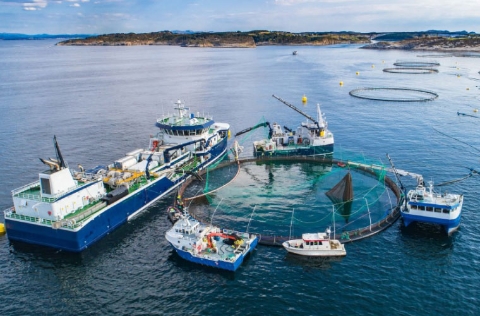
Researchers call for a broader sustainability framework for Mediterranean European seabass and gilthead seabream
Foggia, Italy, 10 June 2026 | A review suggests that integrating Life Cycle Assessment (LCA) and Ecosystem Services Assessment (ESA) could provide a more complete picture of aquaculture sustainability in the Mediterranean
-
Macroalgae will need to demonstrate productive returns before becoming strategic ingredients for aquaculture
Global, 10 June 2026 | The biological potential of macroalgae in aquafeed is gaining scientific support, but the industrial challenge will be to demonstrate that their inclusion improves production efficiency and offsets feed formulation costs