


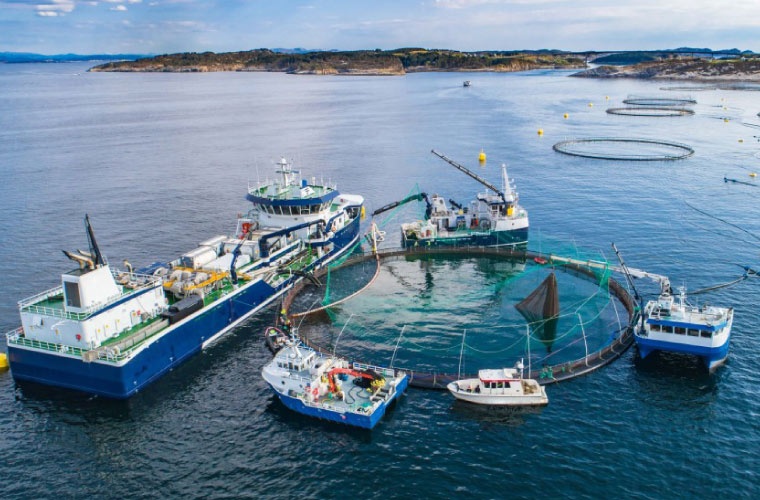
The environmental performance of Mediterranean aquaculture is still assessed primarily through indicators such as carbon footprint, energy use, feed consumption and eutrophication potential. However, a new review published in the International Journal of Environmental Science and Technology argues that these metrics alone may not adequately capture biodiversity impacts and ecosystem-level changes associated with marine fish farming.
The study focused on European seabass (Dicentrarchus labrax) and gilthead seabream (Sparus aurata), the dominant marine finfish species produced in the Mediterranean region. According to the authors, Life Cycle Assessment (LCA) remains the most widely used tool for evaluating environmental performance, particularly greenhouse gas emissions, resource use and eutrophication.
Across multiple studies reviewed, feed production consistently emerges as the main environmental hotspot. Previous assessments have estimated that feed can account for around half of the overall climate impact of seabream and seabass production, while eutrophication indicators are strongly linked to feed use and feed conversion efficiency.
However, the authors argue that conventional LCA approaches struggle to represent highly localised effects such as benthic degradation, habitat alteration, interactions with wild populations, fish escapes or changes in ecosystem services. These impacts can be particularly relevant in Mediterranean, where many farming areas are located in environmentally sensitive oligotrophic waters.
To address this limitation, the review proposes combining LCA with ESA, an approach that evaluates how aquaculture influences functions such as nutrient cycling, habitat provision, water regulation and other ecosystem services.
The authors suggest that running both assessments in parallel, or incorporating ecosystem-service indicators directly into LCA methodologies, could provide a more realistic picture of aquaculture sustainability.
The review also highlights examples from Italy, where nutrient balance indicators developed by ISPRA show that mussel farming can remove substantial amounts of nitrogen and phosphorous form coastal waters. In several regions, nutrient removal by shellfish production exceeds nutrient releases associated with finfish farming, illustrating how ecosystem services could be incorporated into future sustainability assessments.
According to the authors, future sustainability evaluations should move beyond measuring emissions and resource consumption alone and include carrying capacity, biodiversity impacts, ecosystem services and site-specific environmental conditions.
Such an approach could become increasingly relevant as Mediterranean aquaculture expands and regulators place greater emphasis on biodiversity protection and ecosystem-based management.
Reference:
Munir M, Giordano R, Russo C, Cappelletti GM (2026). Biodiversity impacts of Mediterranean finfish aquaculture: integrating life cycle and ecosystem services assessments. International Journal of Environmental Science and Technology, 23:471. DOI: 10.1007/s13762-026-07285-z

Latest news
-

Member States call for EU-wide plan to manage cormorant impacts on aquaculture
Brussels, 11 June 2026 | The initiative seeks to move beyond local derogations and develop coordinated tools to reduce predation pressure on ponds, lagoons, wetlands, fish valleys and extensive aquaculture systems
-
Researchers call for a broader sustainability framework for Mediterranean European seabass and gilthead seabream
Foggia, Italy, 10 June 2026 | A review suggests that integrating Life Cycle Assessment (LCA) and Ecosystem Services Assessment (ESA) could provide a more complete picture of aquaculture sustainability in the Mediterranean
-
Macroalgae will need to demonstrate productive returns before becoming strategic ingredients for aquaculture
Global, 10 June 2026 | The biological potential of macroalgae in aquafeed is gaining scientific support, but the industrial challenge will be to demonstrate that their inclusion improves production efficiency and offsets feed formulation costs