


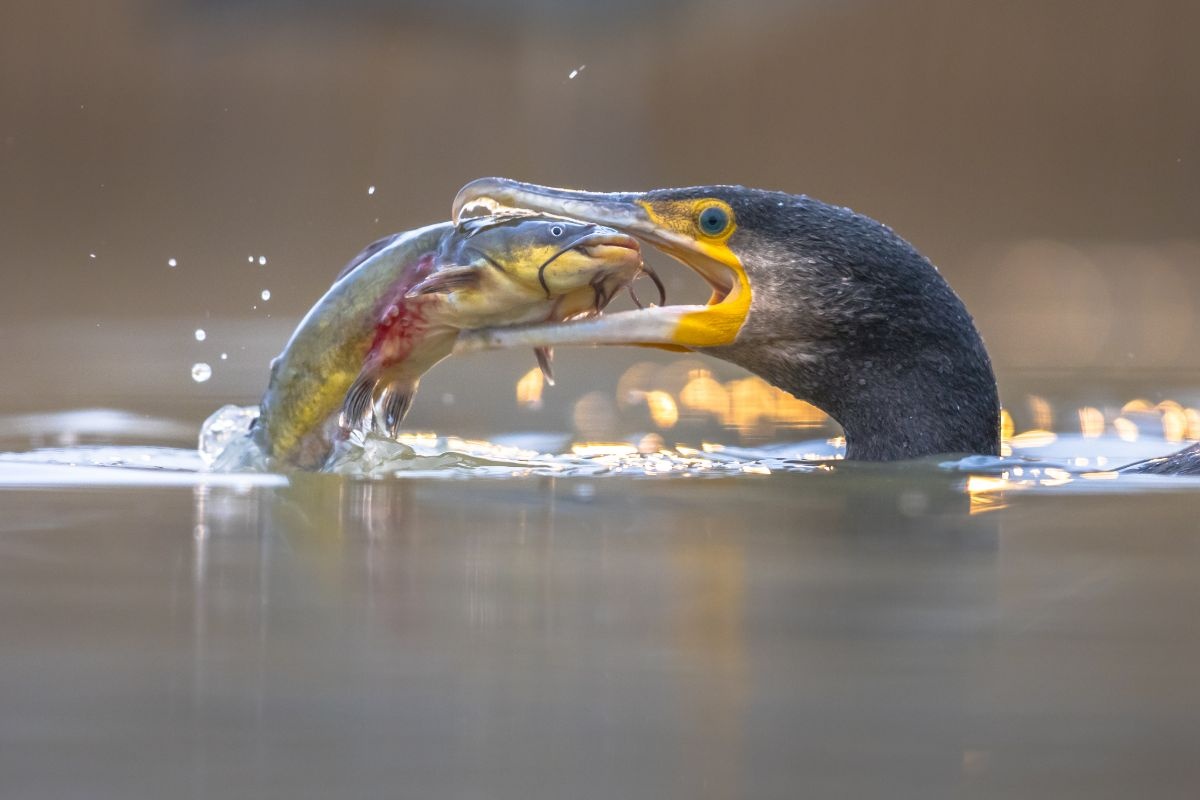
The management of the great cormorant (Phalacrocorax carbo) is back on the European agenda due to its impact on inland fisheries, aquatic ecosystems and aquaculture. At the EU Agriculture and Fisheries Council held on 26 May 2026, Czechia, supported by Croatia, Estonia, Finland, Latvia, Poland, Romania, Sweden and Slovakia, called for work to begin without delay on a European Management Plan for the great cormorant.
The aim is to move beyond fragmented national and regional responses to a mobile, transboundary species. The supporting Member States are calling for a common framework based on scientific evidence, harmonised population monitoring, damage assessment and cooperation between countries.
For aquaculture, the issue has a clear production dimension. In open and semi-open systems, predation can result in biomass losses, injuries to fish, stress, increased health pressure and additional costs for nets, deterrents and other protection measures.
The problem is particularly relevant for Mediterranean production models such as coastal lagoons, fish valleys, wetlands, ponds and extensive inland farms, where fish are more exposed and prevention options may be limited.
The great cormorant is not currently listed in Annex II of the Birds Directive, which covers bird species that may be hunted under national legislation. It therefore cannot be treated as an ordinary game species.
However, the Directive allows derogations to prevent serious damage to fish stocks and fish farms, although these are applied unevenly across Member States.
For Mediterranean aquaculture, the debate is especially sensitive because many traditional production systems depend on a fragile balance between biodiversity conservation, water management and economic viability. Predation pressure can affect farms with relatively low stocking densities, long production cycles and high exposure to wild fauna, making damage harder to prevent and quantify.
Political pressure is also increasing in some Member States to go beyond a management plan and reopen the discussion on the cormorant’s legal status. In Italy, MEP Anna Maria Cisint has asked Agriculture Minister Francesco Lollobrigida to bring the issue to the EU Council and support the inclusion of the cormorant in Annex II A of the Birds Directive. Such an amendment would allow Member States to regulate hunting under national legislation, but it would require an EU legislative reform and would not have immediate effect.
For the European aquaculture sector, the central question is not only whether the cormorant should be added to the list of huntable species, but whether the EU can move from local and emergency responses to a common governance framework for predation. An EU-wide plan could help establish shared data, consistent criteria for assessing damage, faster procedures and a clearer balance between biodiversity protection and the economic sustainability of aquaculture businesses.

Latest news
-

Member States call for EU-wide plan to manage cormorant impacts on aquaculture
Brussels, 11 June 2026 | The initiative seeks to move beyond local derogations and develop coordinated tools to reduce predation pressure on ponds, lagoons, wetlands, fish valleys and extensive aquaculture systems
-
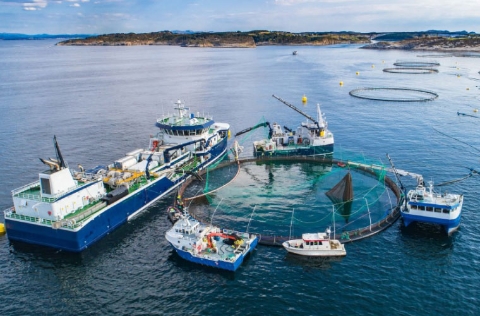
Researchers call for a broader sustainability framework for Mediterranean European seabass and gilthead seabream
Foggia, Italy, 10 June 2026 | A review suggests that integrating Life Cycle Assessment (LCA) and Ecosystem Services Assessment (ESA) could provide a more complete picture of aquaculture sustainability in the Mediterranean
-
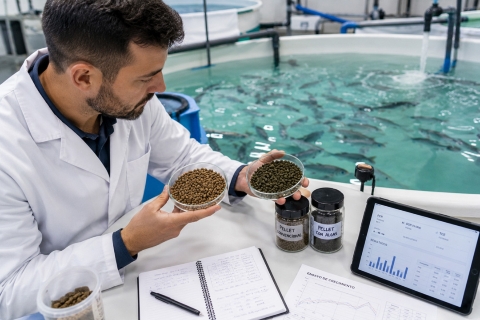
Macroalgae will need to demonstrate productive returns before becoming strategic ingredients for aquaculture
Global, 10 June 2026 | The biological potential of macroalgae in aquafeed is gaining scientific support, but the industrial challenge will be to demonstrate that their inclusion improves production efficiency and offsets feed formulation costs