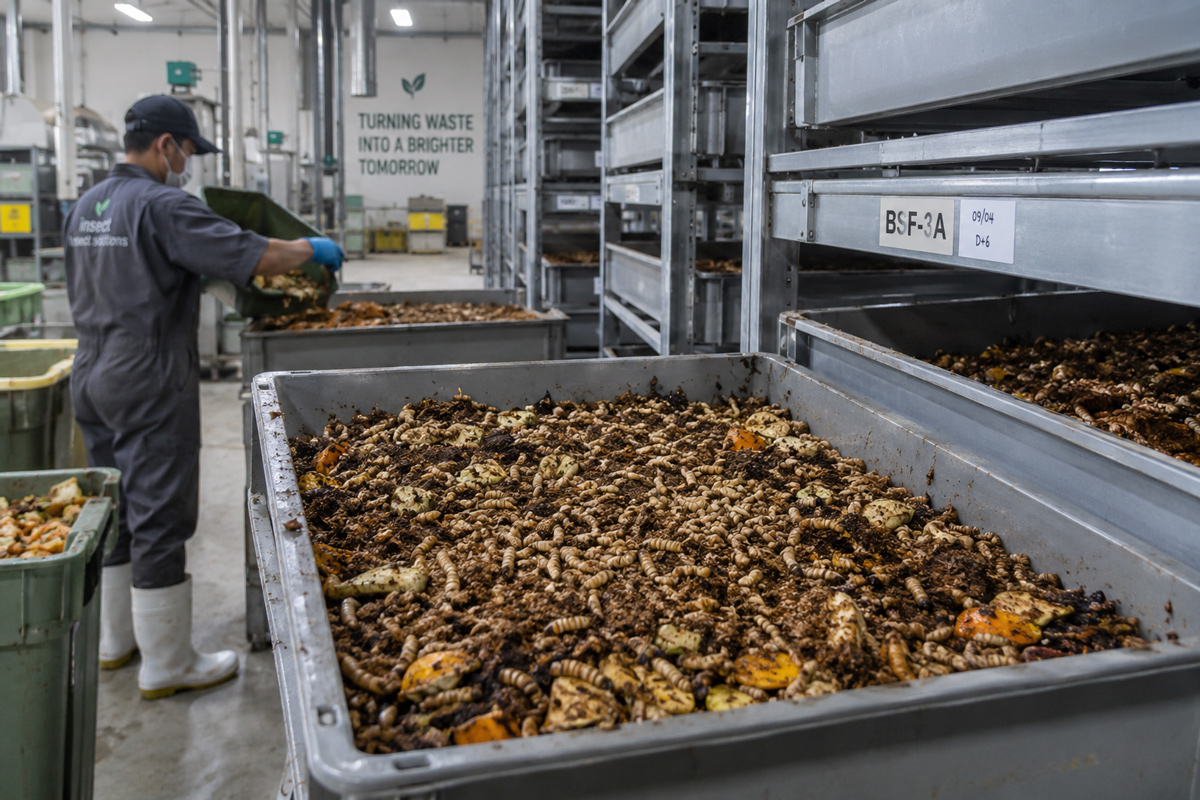
Talking about a maximum percentage of insect meal in aquafeeds may be too simplistic. Accumulated evidence indicates that two diets containing similar proportions of insect-derived ingredients will not necessarily have the same effect on fish, as the response depends, among other factors, on how much chitin the ingredient actually contributes and the species’ ability to utilise it.
A new meta-analysis published in Reviews in Aquaculture provides further evidence in this direction.
Chitin, which is present in insect exoskeletons, has long been identified as one of the factors that can limit digestibility as the inclusion of these raw materials increases.
The new study broadens this perspective by comparing ingredients containing chitin from insects, krill, other crustaceans and yeasts. The results show that the effect depends not only on the presence of chitin, but also on its source and the fish receiving the diet: krill, crustacean and yeast ingredients showed overall favourable effects on growth, while insect-derived ingredients produced a less favourable average response.
One of the most relevant differences emerges when fish are classified according to their position in the food chain. Insect-derived ingredients were associated with reduced growth in species at higher trophic levels and more favourable responses in species at lower trophic levels. The meta-analysis also identifies trial duration and initial fish weight among the variables that help explain why the same type of ingredient can produce different results across studies.
The amount of chitin further refines this interpretation. In diets containing insect-derived ingredients, the statistical analysis identified a marked change in growth response above 2.91% dietary chitin. This figure does not represent a universal maximum inclusion level, nor does it mean that exceeding this percentage will necessarily reduce growth in every species. It is a statistical breakpoint derived from the studies currently available and should be interpreted alongside species, trophic level, fish size, feeding duration and ingredient characteristics.
For feed formulation, the implication is that the percentage of insect meal alone may provide insufficient information to predict how a diet will perform. Even meals produced from the same insect species can differ in composition depending on the rearing substrate, developmental stage, processing method or degree of defatting, and can therefore contribute different amounts of chitin.
Just as feed formulators work with digestible protein, available energy and amino acids, measuring and characterising the chitin fraction could help establish inclusion levels that are better tailored to individual species.
The debate around insects in aquaculture is therefore gradually moving beyond demonstrating whether they can partially replace conventional feed ingredients towards determining how they can be used more precisely. The challenge is no longer to identify a single maximum inclusion percentage for all fish, but to combine ingredient composition, digestibility and species characteristics to find the point at which insect-derived ingredients retain their nutritional and environmental advantages without compromising growth or feed efficiency.
Scientific reference: Weththasinghe, P. & Schrama, J.W. (2026). Chitin in Aquafeeds: A Meta-Analysis of Fish Growth Performance and Nutrient Digestibility. Reviews in Aquaculture. DOI: 10.1111/raq.70212

Related

Latest In-depth
-

Ocean Aquaculture begins work on Spain hatchery designed to produce eight million greater amberjack juveniles a year
Almería, Spain, 9 September 2026 | The first phase will involve an investment of around €15 million and is expected to begin production in January 2028, supplying both the group’s future offshore farms and other Mediterranean producers