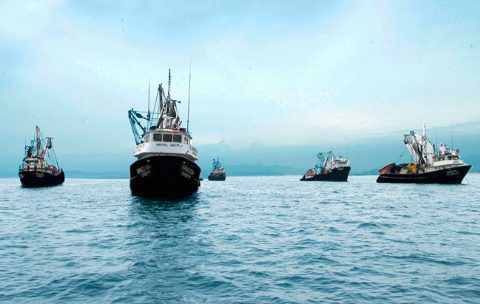
Peru’s decision to extend the anchovy fishing ban across a large area of its coastline is adding pressure to the international marine ingredients market, at a time when global production remains weaker than in the same period last year, according to IFFO, the organisation representing a significant part of the sector.
The suspension, which had been in force until 10 June, will now continue without a defined end date due to the persistence of conditions associated with coastal El Niño.
According to IFFO, the repeated suspensions reflect ongoing concerns over warmer waters and a high share of juvenile fish. This points to an anchovy biomass that is still present, but more dispersed, making fishing activity more difficult and requiring a precautionary approach.
The measure may be lifted fully, partially or gradually by Peru’s Vice-Ministry of Fisheries and Aquaculture, depending on the scientific assessment of the Peruvian Sea Institute (IMARPE) and the evolution of biological, fishing and environmental conditions.
The impact of this decision extends beyond the Peruvian fishing sector
Peru is one of the world’s main suppliers of fishmeal and fish oil, key ingredients for aquaculture feed, especially for high-value species and production stages where nutritional quality and lipid profile remain determining factors.
“Peru accounts for a large share of global fishmeal and fish oil supply, implying that disruptions quickly tighten availability,” said Enrico Bachis, market director at IFFO.
The announcement comes at a time of widespread weakening in marine ingredient production. According to data shared by IFFO members, fishmeal production fell by 21% year-on-year in April 2026, while cumulative production was down 26% compared with 2025.
Fish oil production also showed a negative trend, with output falling by 19% in April compared with the same month last year, and cumulative production down 14%.
In this case, regional performance was more mixed: Spain recorded a 36% increase in cumulative production and Chile remained close to stable, while Peru, Iceland/North Atlantic and several African countries contributed to the overall decline.
Although the feed industry has made progress in diversifying protein and lipid sources, fishmeal and fish oil continue to play a strategic role in high-performance formulations, functional diets, early life stages and carnivorous species.
The evolution of the Peruvian fishing season will therefore be a key factor for aquafeed manufacturers and producers, in a year marked by cost pressure, the need to secure supply and the gradual adjustment of formulations towards alternative sources.

Related



Latest In-depth
-
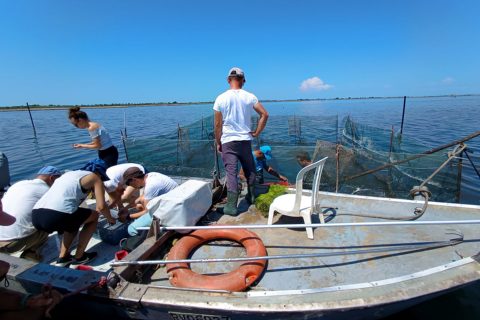
Clams more resistant to heat and Perkinsus: research paves the way for selective breeding
Padua, Italy, 16/10/2026 | University of Padua researchers explain to misPeces the findings presented at Aquaculture Europe 2026 and the steps needed to transfer them to hatcheries. Initial applications could emerge within the next two or three years, although the relationship between resistance, growth and other production traits still need to be assessed